
Cannabis Packaging Bag Sizes & Capacities Explained: 1g, 3.5g, 7g, 14g, 28g
Cannabis Packaging Bag Sizes & Capacities Explained: 1g, 3.5g, 7g, 14g, 28g
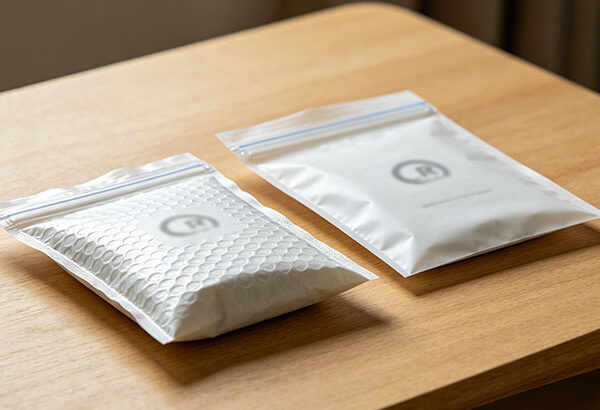
Most cannabis packaging bag sourcing debates converge on the same question: how big does the bag need to be for this product? The answer is not an opinion — it is a fixed set of standard pairings.
In the CHITAI cannabis bags range, five capacities correspond to five bag sizes. Both are listed in ascending order, so the pairing runs:
| Capacity | Bag Size | Equivalent |
|---|---|---|
| 1g | 3"×4" | 1 gram |
| 3.5g | 4"×5" | ⅛ oz |
| 7g | 5"×6" | ¼ oz |
| 14g | 6"×8" | ½ oz |
| 28g | 8"×10" | 1 oz |
That is the default combination for the CHITAI standard range. When flower density, pre-roll geometry, or edible fill volume does not match the default, capacity and size can be customized. CHITAI supports ODM and OEM custom manufacturing with customization for capacity, size, CR level, material structure, smell proof level, printing specifications, and transparency.
This guide explains what those five pairings mean, how child-resistant and barrier requirements layer onto them, and how to avoid the cost of a mismatched size.
Problem Definition: Why the Wrong Bag Size Costs More Than a Price Difference
A wrong size creates extra cost in three places: product protection, regulatory compliance, and packaging line speed.
Too small. A 3.5g bag loaded with 4g of flower bulges. The zipper is stressed, the seal is stretched, and headspace disappears. On a continuous heat-sealer, that stress turns into seal defects. The barrier values may still be on paper — OTR ≤0.05 cm³/(m²·24h) and WVTR ≤0.03 g/(m²·24h) are the reference points for high-barrier bags — but the physical bag has already moved away from the tested state.
Too large. Flower rattles inside an oversized bag. Trimming loss increases, display quality suffers, and the excess headspace creates a trapped-air pocket where oxidation can start.
Compliance margins. Child-resistant requirements do not scale linearly with size. The 16 CFR 1700.20 testing procedure requires that 85% of children aged 42–51 months cannot open the package within 5 minutes. Bag size affects both graspability and zipper mechanics. California guidance further notes that, for specified single-serving applications, plastic packaging that is at least 4 mils thick and heat-sealed without an easy-open tab, dimple, corner, or flap may qualify under that state's single-use CRP route. A small size step can cross the line between testable and non-testable.
Canadian container rules add another layer: the immediate container must not contain more than the equivalent of 30g of dried cannabis under SOR-2018-144, section 108. A 28g bag sits inside that ceiling, but the bag size alone does not establish compliance — product net weight, labelling, and container features all count.
Industry Background: Why Bag Size Standardization Matters More Than It Did Five Years Ago
Flexible pouches now carry much of the cannabis packaging volume. Grand View Research estimates that plastics accounted for 54.3% of global cannabis packaging material share in 2025. Print quality, barrier performance, and the ability to run a small bag and a large bag off the same print cylinder all drive that share.
Regulation has also moved. California requires cannabis goods to be sold in child-resistant packaging, as set out in state DCC guidance. Additional functional requirements include packaging that prevents contamination, tamper-evident features, and resealable construction. Canada requires the immediate container to be opaque or translucent, prevent contamination, keep dried cannabis dry, provide reasonable assurance that it has not been opened, and meet child-resistant requirements under SOR-2018-144, section 108.
The practical result: bag size is no longer just a matter of fitting the product. It has to satisfy child-resistant mechanics, barrier targets, print space, and the way the product is actually packed in use. A standardized five-capacity family is the mechanism that lets a brand achieve that across a full SKU line without re-tooling for every size.
Detailed Solution: The CHITAI Cannabis Bags Standard Specification Family
CHITAI cannabis packaging bags are produced by Dongguan Chitai Packaging Products Co., Ltd, a professional manufacturer specializing in packaging solutions for the cannabis industry. The company was established in 2025 and connects to over a decade of printing and packaging experience since 2012. The factory covers 4200 m², produces 30,000,000 units annually, and exports 30% of output, with main markets in North America and Europe. Production equipment includes 2 digital printing machines, 30 fully automatic bag-making machines, and 4 gravure printing machines. The site runs a Class 1,000,000 dust-free workshop and an in-house laboratory.
The specification family is fixed and repeatable:
- Capacity: 1g, 3.5g (⅛ oz), 7g (¼ oz), 14g (½ oz), 28g (1 oz).
- Specification: 3"×4", 4"×5", 5"×6", 6"×8", 8"×10".
- Material structure: PET/VMPET/PE/NY/AL.
- Smell proof level: Good, Excellent, Premium.
- Printing: Digital Printing (small batch), Gravure Printing, Flexographic Printing.
- Transparency: Customization based on customer needs.
- Customization: Yes — capacity, size, CR level, material structure, smell proof level, printing specifications, and transparency.
The family covers Cannabis Flower, Pre-roll, Edibles, CBD Packaging, Tobacco Packaging, Vape, Herbal Products, and the Health product industry.
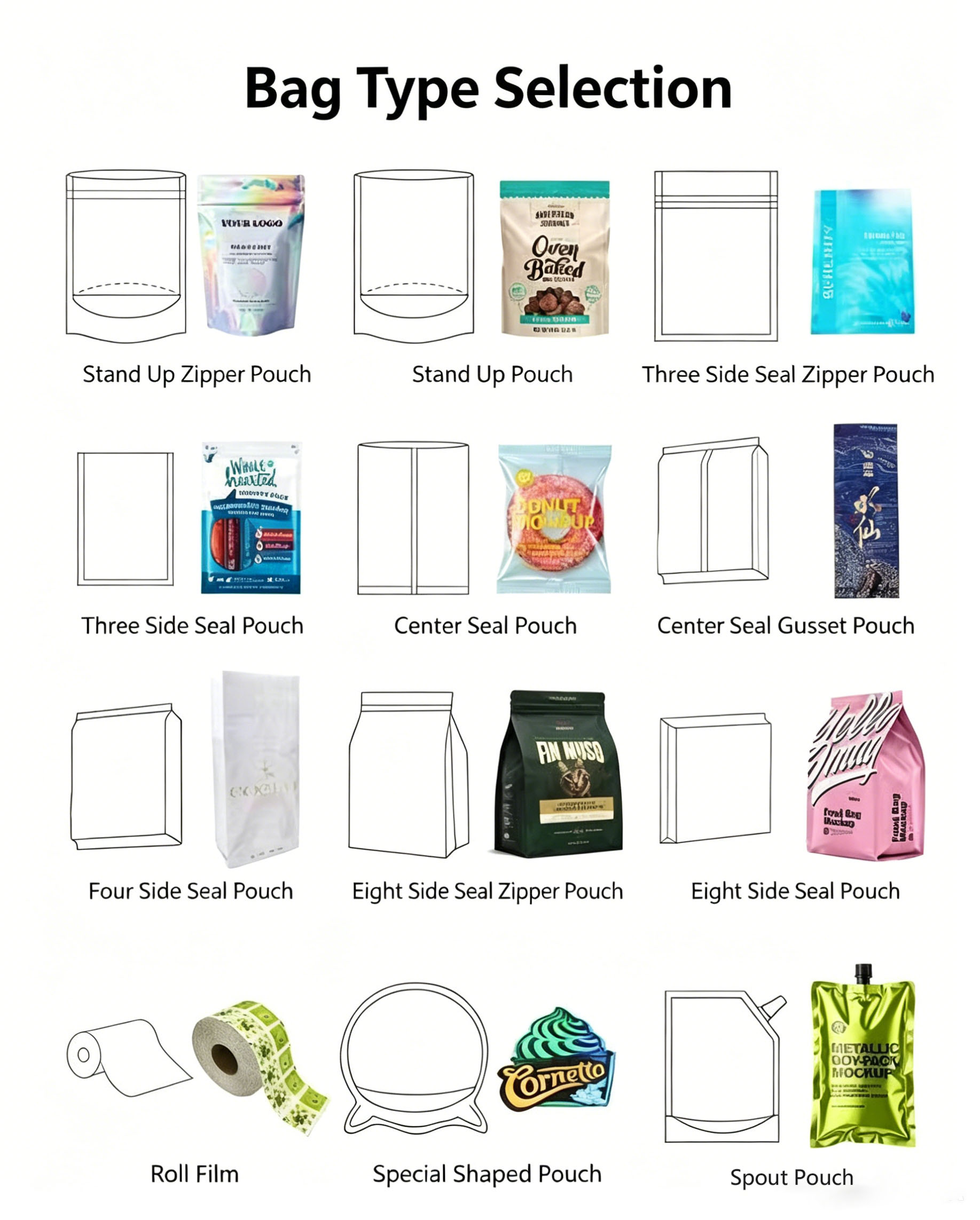
Barrier Performance and Smell Proof Characteristics
High barrier configurations reach an oxygen transmission rate (OTR) of ≤0.05 cm³/(m²·24h) and a water vapor transmission rate (WVTR) of ≤0.03 g/(m²·24h). The aluminum foil layer runs 7 to 9μm, free of pinholes, and is used to block aroma leakage. The material structure is PET aluminum-coated + pure aluminum foil + PE heat-sealing layer. Waterproof grade is IPX4. Heat seal strength is ≥40N/15mm with no air leakage and no odor seepage. Tear strength is ≥35N longitudinal and ≥30N transverse. The bag is completely opaque, with zero light transmission.
Those figures line up with the published high-barrier benchmark: premium cannabis bags achieve OTR below 0.05 cm³/(m²·24h) and WVTR under 0.03 g/(m²·24h).
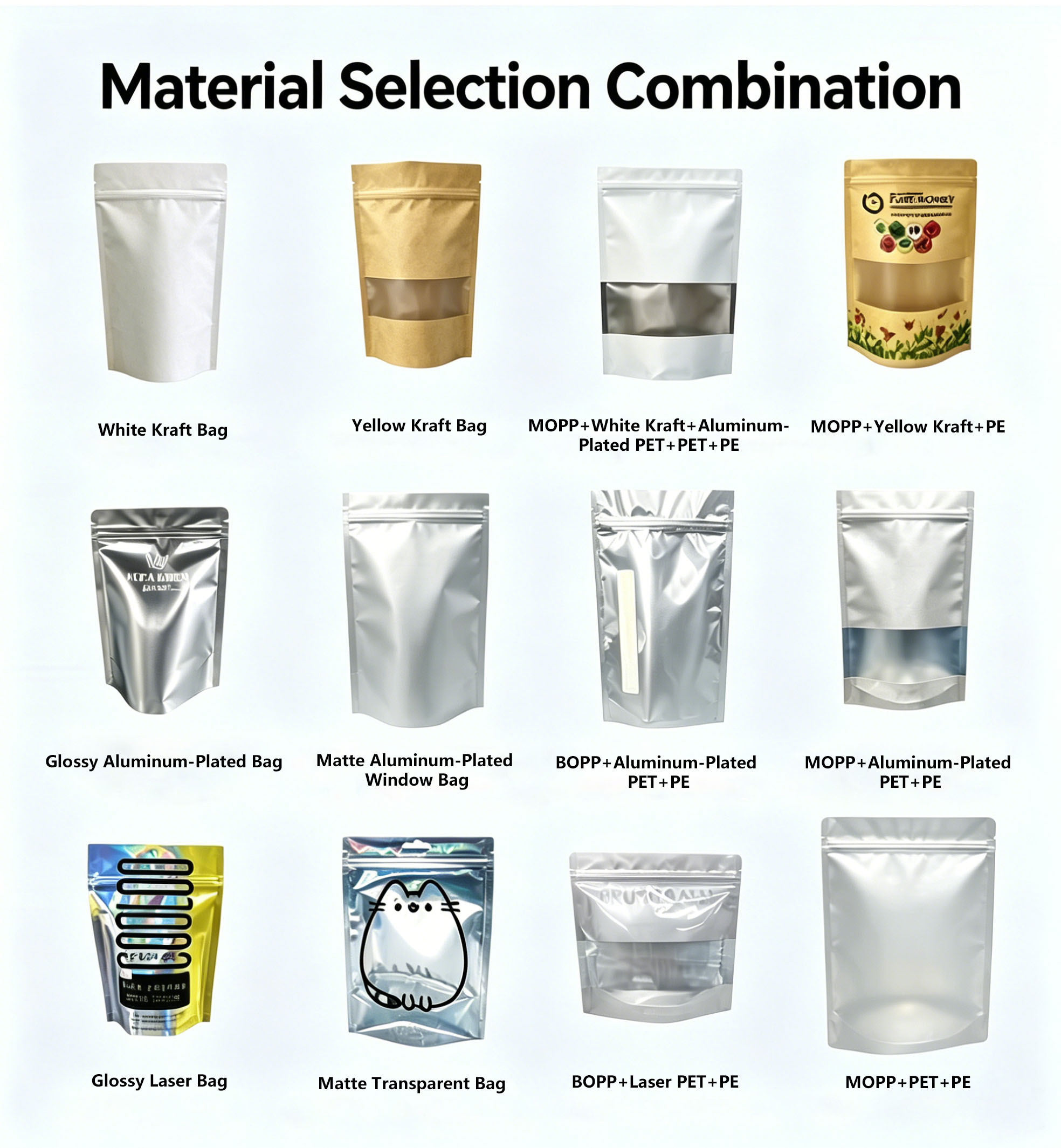
Child-Resistant Options
CHITAI's CR options include CR Zipper ASTM D3475, Push Lock ASTM D3475, and Slide Lock ASTM D3475. An optional CR children's safety zipper is available. In regulated markets, California guidance identifies PPPA certification under 16 CFR 1700.15(b)(1) as one route to child-resistant compliance, while 16 CFR 1700.20 sets the 85%/5-minute testing threshold.
Print Options
Digital printing (small batch), gravure printing, and flexographic printing cover custom logo and warning text printing on the bag. Digital printing is specified for small batch runs. Gravure and flexographic printing are listed as the alternative methods in the standard range.
Field Validation Signal
A 500,000-unit dried cannabis flower packaging project for a global cannabis brand reported no odor leakage and full compliance with local child-resistance and tamper-prevention rules, with a stated shelf life of 2 to 3 years. The highlight profile of that project was child-resistant safety design, high odor barrier, solvent-free material, and tamper-evident and anti-counterfeit structure.
Step-by-Step Breakdown: How to Match a Bag Size to a Product
- Define the product type first. Start from the listed scope: Cannabis Flower, Pre-roll, Edibles, CBD Packaging, Tobacco Packaging, Vape, Herbal Products, and the Health product industry. The product type determines which container features are mandatory — for example, how opacity interacts with Canadian rules, or whether an edible needs a CR-priority zipper.
- Estimate the actual occupied volume. Weight is not volume. A dense 3.5g flower load and a fluffy 3.5g cultivar occupy different volumes. Pre-roll length or diameter dominates. Edibles need enough fill space for the hard candy or gummy to stay intact.
- Match to the standard size. Start from the closest pairing in the 1g→3"×4", 3.5g→4"×5", 7g→5"×6", 14g→6"×8", 28g→8"×10" sequence. Those five combinations are the default.
- Layer on functional requirements. Child resistance, smell proof level, and barrier performance are all added on top of the base size. An ASTM D3475 CR zipper configuration may behave differently on a larger bag than on a smaller one. Choose the smell proof level from Good, Excellent, or Premium if the product needs it.
- Choose a print method and finish. Digital printing (small batch), gravure printing, flexographic printing. Transparency is customized to customer needs — but note that Canadian container rules require opaque or translucent packaging under SOR-2018-144, section 108.
- Sample and validate. Lead time for samples is 3–5 days. Validate zipper feel, seal integrity, and target barrier values on the sample before releasing bulk. CHITAI's in-house laboratory and Class 1,000,000 dust-free workshop support that step.
Use Cases: Which Formats Fit Which Product Types
Cannabis Flower. Flower spans the full size range. 1g suits a single-dose format; 3.5g, 7g, 14g, and 28g cover ⅛, ¼, ½, and 1 oz flower loads. High barrier and smell proof are central because flower is the most aromatic form. Solvent-free material selection and anti-tamper structure suit brands that need a tighter seal profile.
Pre-Roll. Pre-roll bags need to hold a cylinder without rolling. 1g pre-rolls suit the smallest size; multi-pack pre-rolls suit the larger sizes. Resealability matters because pre-roll bags are opened and closed repeatedly.
Edibles. Child resistance is most critical here. The 85%/5-minute threshold under 16 CFR 1700.20 applies directly to edible packaging. CR Zipper, Push Lock, and Slide Lock options align with ASTM D3475, and the range covers 1g to 28g.
CBD. CBD products typically rely on the smaller capacities — 1g and 3.5g — and a premium look. Smell proof level and transparency settings are customizable to meet specific brand appearance requirements.
Tobacco, Vape, Herbal, and Health Products. These products share the bag specifications because the listed scope of application includes Tobacco Packaging, Vape, Herbal Products, and the Health product industry.
Comparison Table: Standard Sizes Against Capacities
| Capacity | Bag Size | Equivalent | Typical Use Context |
|---|---|---|---|
| 1g | 3"×4" | 1 gram | Single-dose formats, CBD, small edible portions |
| 3.5g | 4"×5" | ⅛ oz | ⅛ flower, single pre-roll, CBD retail portions |
| 7g | 5"×6" | ¼ oz | ¼ flower, multi-pack pre-rolls |
| 14g | 6"×8" | ½ oz | ½ flower, mid-range retail |
| 28g | 8"×10" | 1 oz | 1 oz flower, bulk packs |
All five sizes can be specified with CR Zipper, Push Lock, or Slide Lock under ASTM D3475, plus a smell proof level of Good, Excellent, or Premium. The material structure is PET/VMPET/PE/NY/AL, and high-barrier configurations reach OTR ≤0.05 cm³/(m²·24h) and WVTR ≤0.03 g/(m²·24h). Custom sizes and capacities remain available on top of this standard family.
FAQ
Are child-resistant options available across the standard 1g to 28g size range?
Yes. CHITAI offers CR Zipper ASTM D3475, Push Lock ASTM D3475, and Slide Lock ASTM D3475 in its standard cannabis packaging bag series. An optional CR children's safety zipper is also available. For regulated markets, specifications should align with the 16 CFR 1700.20 testing procedure, which requires that 85% of children aged 42–51 months cannot open the package within 5 minutes. Fit for a specific bag size and zipper combination should be confirmed during sampling.
Can ODM or OEM customization change the size while keeping barrier and child-resistant properties?
Yes. ODM and OEM manufacturing are supported. Customization covers capacity, size, CR level, material structure, smell proof level, printing specifications, and transparency. High-barrier configurations reach OTR ≤0.05 cm³/(m²·24h) and WVTR ≤0.03 g/(m²·24h). When those metrics are required on a custom size, they are validated at the sample stage rather than after bulk release.
What is the MOQ for custom printed cannabis packaging bags?
MOQ is 10,000 units. Digital printing supports small-batch orders. Monthly capacity is 2,500,000 units, and lead time runs 3–5 days.
Can I get a sample of a specific size before approving a bulk order?
Yes. Lead time for samples is 3–5 days. CHITAI's in-house laboratory supports sample validation on the target bag size, material structure, and CR configuration. To order samples or request a quote, contact sales@packagingforcannabis.com or download the CHITAI brochure.
Conclusion
Size and capacity are decisions made before the tooling quote, not after. The five pairings in the CHITAI range — 1g, 3.5g, 7g, 14g, and 28g against 3"×4", 4"×5", 5"×6", 6"×8", and 8"×10" — cover cannabis flower, pre-roll, edibles, CBD, tobacco, vape, herbal, and health products.
Reliability comes from matching the specification, validating the sample, then scaling. High-barrier metrics, ASTM D3475 CR options, and customizable smell proof levels give each size a baseline. ODM and OEM services extend the pairings beyond the standard family.
Request a Sample or Quote for Your Size
Contact CHITAI to discuss the size, capacity, CR, and barrier requirements for your product line.
sales@packagingforcannabis.com · packagingforcannabis.com · Download the brochure
Have Questions or Need More Details?
Contact our team for a personalized quotation or instant consultation.
Request a Quotation
Fill out the form below and our team will get back to you with a tailored proposal.
WhatsApp Direct Chat
Prefer to chat in real-time? Message us on WhatsApp for instant assistance & quick answers.
- Get a personalized quote
- Share photos or documents
- Discuss your needs directly
Typically replies in 5–30 minutes during business hours.