
CR Zipper vs Push Lock vs Slide Lock: Child-Resistant Cannabis Bags Compared
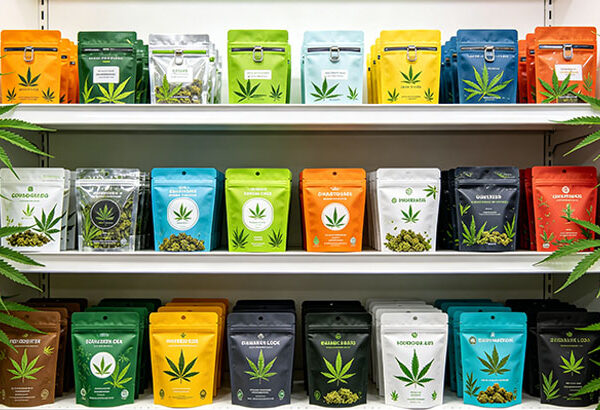
Short answer: CR Zipper, Push Lock and Slide Lock are three child-resistant closure options offered by Dongguan Chitai Packaging Products Co., Ltd, a cannabis packaging bag manufacturer based in Dongguan, Guangdong, China, and all three are listed against ASTM D3475 in Chitai's product specification. They are built on the same film platform, so the decision is not which closure is 'more compliant.' The decision is which opening and reclosure behaviour fits your product format, your retail environment, your odor-proof target, and your print run.
That distinction matters because most sourcing mistakes do not come from choosing a non-compliant bag. They come from specifying a closure that performs well in a sample photo but poorly on a 28 g flower bag, or from assuming a closure upgrade compensates for an under-specified barrier layer. This guide separates the two: what the three closures share, what actually varies between them, and how to lock a specification that survives sampling, production and a dispensary shelf.
Problem Definition: The Closure Question Is Really Four Decisions
Buyers usually phrase the question as 'zipper, push lock or slide lock?' The work behind that question is broader. A child-resistant cannabis packaging bag specification contains four independent decisions, and only one of them is the closure.
- Compliance evidence. Which child-resistant route applies in the destination market, and which document proves it for this exact bag?
- Barrier and odor-proof grade. How much moisture, oxygen and aroma transmission the product can tolerate over its shelf life.
- Format fit. Whether the closure, capacity, bag dimensions and fill method work together without stressing the seal area.
- Print and order economics. Which printing method matches your run length and artwork, and what minimum order the project needs.
If you answer only the closure question, you still have three unresolved variables. The sequence below handles all four, starting from the platform shared by all three closures.
Industry Background: Why Closure Choice Moved Up the Agenda
Two forces pushed closure selection from a footnote to a shortlisting criterion. The first is regulation. California law requires cannabis goods to be sold in child-resistant packaging designed to be difficult for children under five to open (California Department of Cannabis Control guidance), and the federal reference point under 16 CFR 1700.20 states that 85% of children aged 42–51 months must be unable to open the package within 5 minutes. Health Canada states that cannabis products must be packaged in child-resistant containers, except cannabis plants and plant seeds, and Canadian Cannabis Regulations section 108 also caps the immediate container at the equivalent of 30 g of dried cannabis.
The second force is market scale. Grand View Research values the global cannabis packaging market at USD 3.2 billion in 2025, projected to reach USD 19.3 billion by 2033, with plastics accounting for 54.3% of material share in 2025. Absolute market sizing differs between research houses, so treat totals as directional and use them for capacity planning rather than for volume commitments. The direction is consistent: flexible, barrier-driven formats keep absorbing share, and closures sit directly on that flexible format.
A third signal is buyer behaviour. In regulated retail, the package is opened and reclosed repeatedly in front of staff and customers. That pushes buyers from 'is it child-resistant at the factory gate' toward 'does it stay child-resistant after the tenth opening,' which is a reclosure question, not a film question.
Detailed Solution: One Platform, Three Closures
Chitai's child-resistant cannabis bags are specified as a single material and barrier platform with three closure options. Understanding the shared layer first prevents the most common error: attributing barrier performance to the closure.
The shared material and barrier platform
| Film structure | PET / VMPET / PE / NY / AL |
| Water vapor transmission (WVTR) | ≤ 0.03 g/(m²·24h) |
| Oxygen transmission (OTR) | ≤ 0.05 cm³/(m²·24h) |
| Aluminum foil | 7–9 μm, pinhole-free, blocks aroma leakage |
| Heat seal strength | ≥ 40N/15mm, no air leakage or odor seepage |
| Tear strength | ≥ 35N longitudinal, ≥ 30N transverse |
| Light blocking | Fully opaque, zero light transmission |
| Waterproof grade | IPX4 water repellent |
| Sealing | Double sealing: repeated zipper sealing plus top heat seal |
| Odor-proof grades | Good, Excellent, Premium |
| Child-resistant options | CR Zipper (ASTM D3475), Push Lock (ASTM D3475), Slide Lock (ASTM D3475) |
| Capacities | 1g, 3.5g (⅛ oz), 7g (¼ oz), 14g (½ oz), 28g (1 oz) |
| Sizes | 3''x4'', 4''x5'', 5''x6'', 6''x8'', 8''x10'' |
| Printing | Digital printing (small batch), gravure printing, flexographic printing |
Two practical consequences follow. First, WVTR ≤0.03 g/(m²·24h) and OTR ≤0.05 cm³/(m²·24h) are platform-level figures that are not created or degraded by the closure type in Chitai's specification — they are created by the aluminum-containing film. Second, because the top heat seal and the closure are specified together as a double seal, a closure change still requires re-validating the seal configuration in a sample. The closure is a mechanical interface; the barrier is chemistry and metallization.
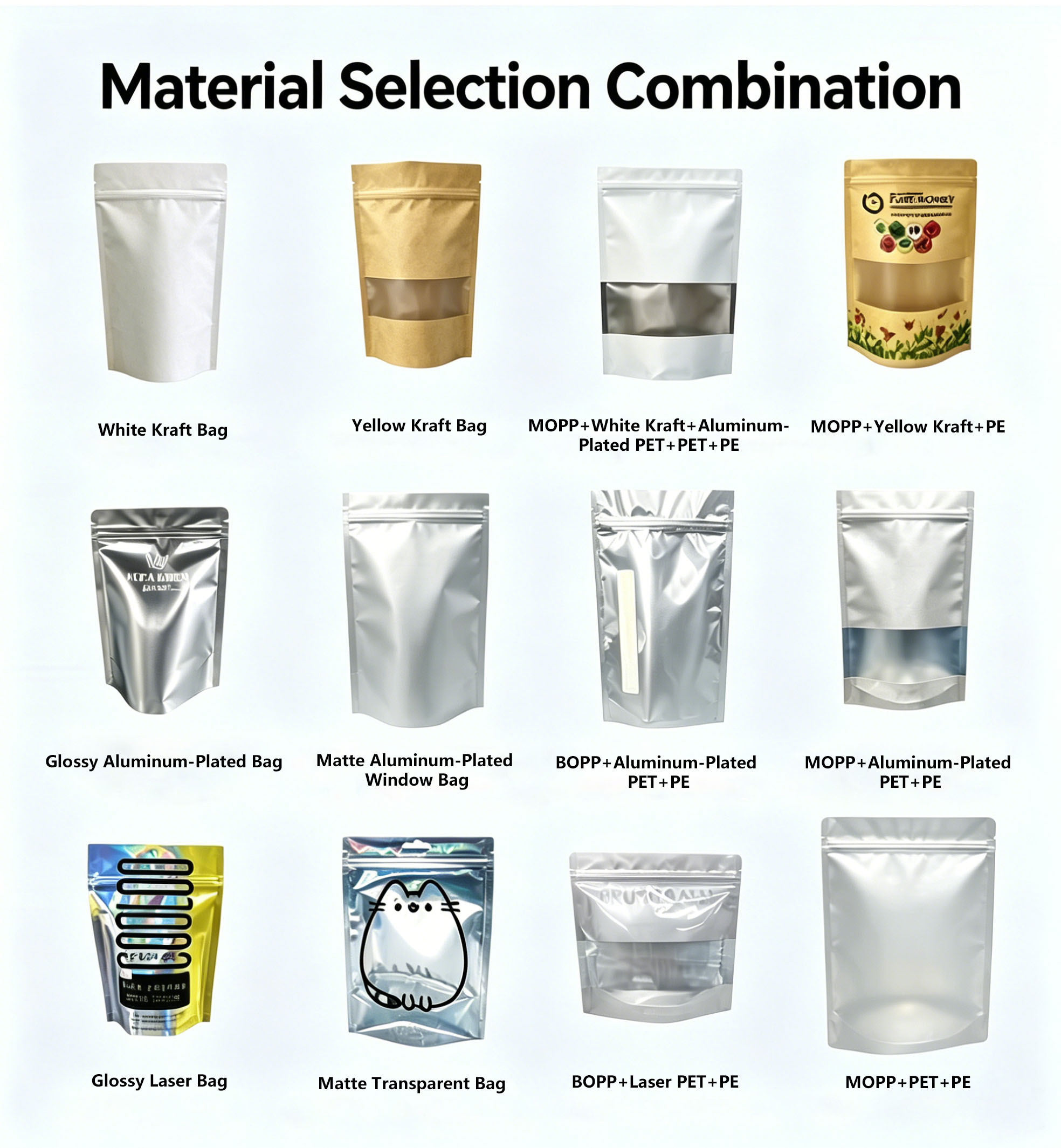
The five-layer PET/VMPET/PE/NY/AL structure is shared across all three child-resistant closures.
CR Zipper: reclosable track with a child-resistant opening action
The CR Zipper is a reclosable zipper track engineered so that opening requires a deliberate action rather than a simple pull. In Chitai's specification it is listed against ASTM D3475 and combined with a repeated zipper seal plus a top heat seal. For buyers, the zipper's practical value is repeated reclosure across a multi-week consumption cycle, which makes it a natural fit for flower formats from 3.5 g upward, where the bag is opened many times before it is empty.
What to verify on the sample: whether the opening action is repeatable after ten or more cycles, whether the zipper track re-engages fully after each closure, and whether the bag still holds its stated odor-proof grade after repeated use. Under California guidance, a package that stays child-resistant after opening falls into the multiple-use category, while a package that is only child-resistant before first opening is single-use. Confirm which classification your SKU is intended to satisfy before approving artwork.
Push Lock: press-type closure
Push Lock is Chitai's press-type child-resistant closure, also listed against ASTM D3475 and available on the same film platform. It presents a different opening gesture from a zipper track, which matters on a crowded dispensary counter: staff and customers learn one motion and repeat it.
What to verify on the sample: the force and hand position needed to release the lock, how consistently that action can be repeated, and how the closure behaves at the seal shoulder on wider formats. Because the platform is shared, odor-proof grade and barrier figures should be confirmed on the sample report rather than assumed from the closure name.
Slide Lock: slider-track closure
Slide Lock uses a slider component to open and close the bag, and is likewise listed against ASTM D3475. Sliders give buyers a distinct visual and tactile cue, which is useful when a brand wants the closure itself to signal 'child-resistant' at retail.
What to verify on the sample: slider travel, whether the slider can be fully closed in one pass on a filled bag, and whether the slider path is compatible with your fill opening and the top heat seal position. Sliders add a mechanical component to the pack, so this is also the closure where sample approval should confirm that the child-resistant evidence and the physical sample carry the same reference number.
Pairing closure with odor-proof grade
Odor-proof grades are available as Good, Excellent and Premium, and all three closures can be specified on any of them. The grade should be chosen from the product, not from the closure: a 28 g flower bag sold in a small retail space carries a different aroma burden than a sealed single-serving edible. For reference, a 500,000-unit production run for a cannabis brand owner packaging dried flower reported no odor leakage and a 2–3 year shelf life, using a child-resistant design with a solvent-free material construction and an anti-tampering structure. That is the outcome to specify against, and it is only achievable when grade, film and seal are decided together.
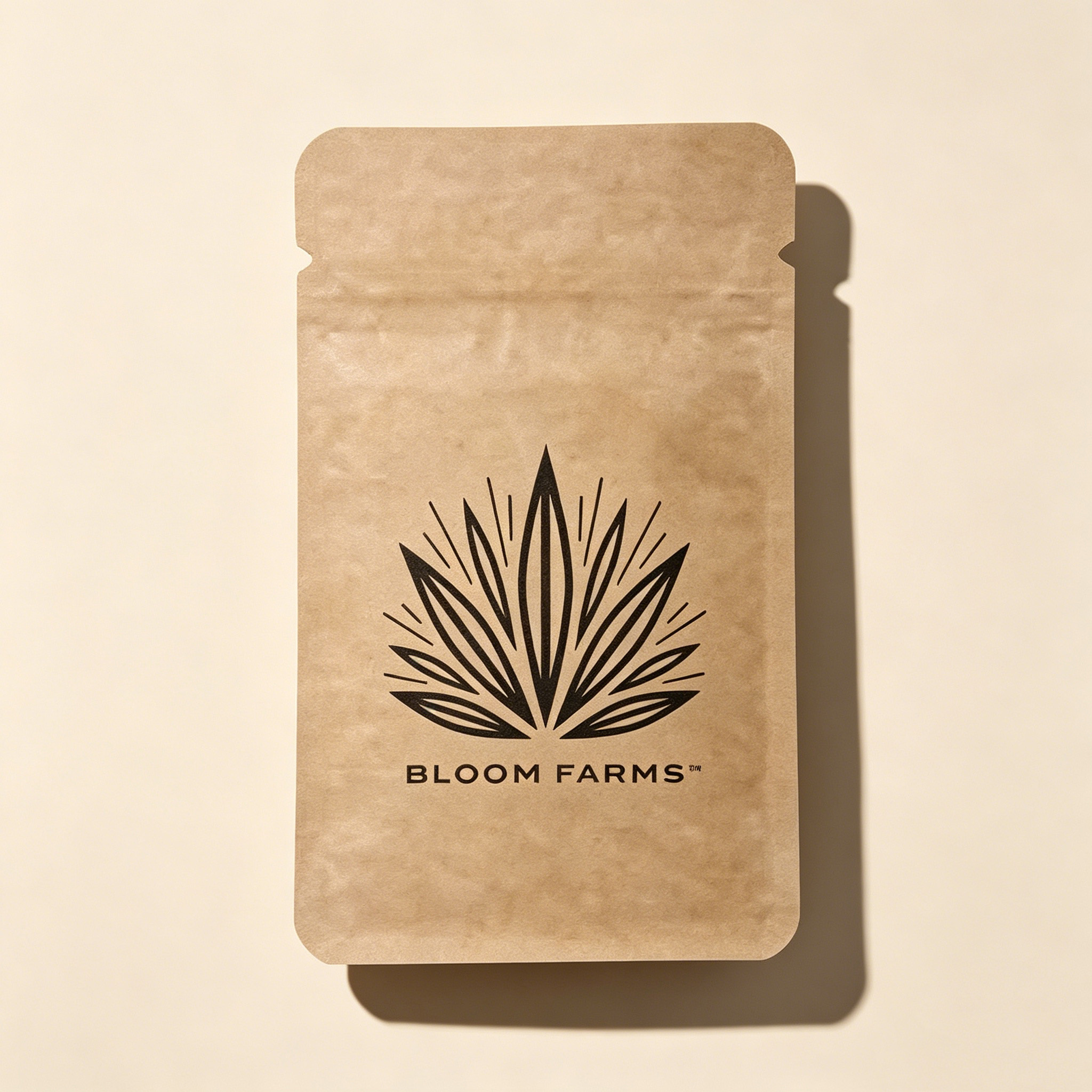
Odor-proof grade is selected independently of closure type; the closure does not set the barrier level.
Step-by-Step Breakdown: Specifying a CR Bag in Six Steps
- Define the compliance route and the market. State the destination market and whether the SKU must be child-resistant only before first opening or after every opening. This single answer narrows the closure set before any aesthetic discussion starts.
- Fix capacity and dimensions. Choose from 1 g, 3.5 g, 7 g, 14 g and 28 g, and from 3''x4'', 4''x5'', 5''x6'', 6''x8'' and 8''x10''. Note that the Canadian 30 g dried-cannabis-equivalent container limit is a regulatory ceiling, not a capacity benchmark — a 28 g bag can comply only after product-specific review.
- Select the odor-proof grade. Good, Excellent or Premium, matched to shelf life and to how strongly the product releases aroma in a closed retail environment.
- Choose the closure, then re-check it against the format. Compare CR Zipper, Push Lock and Slide Lock on opening gesture, reclosure behaviour and fill opening. Test with the bag at its filled weight, not empty.
- Choose the printing method. Digital printing suits small batches and short-run artwork changes; gravure printing suits long runs where per-unit cost and colour consistency dominate; flexographic printing suits high-volume work where the artwork fits the process. Custom logos and warning text are available.
- Approve the sample against documents, not against a photo. Match the physical sample, the child-resistant reference, the barrier figures and the odor-proof grade to the same specification line before releasing mass production.
Use Cases: Mapping Closure to Product Format
| Product format | Typical capacity and size | Closure consideration |
|---|---|---|
| Dried flower, single-serve trial | 1 g / 3''x4'', 4''x5'' | Smallest format; confirm the closure does not crowd the top seal area. |
| Dried flower, standard retail pack | 3.5 g–7 g / 4''x5'', 5''x6'' | Repeated opening; reclosure durability matters most here. |
| Dried flower, value and bulk pack | 14 g–28 g / 6''x8'', 8''x10'' | Highest aroma burden; pair closure with Excellent or Premium grade and check filled-bag reclosure. |
| Pre-roll multi-packs | Flat formats / 4''x5'', 5''x6'' | Opening gesture is learned by staff; pick one closure and keep it consistent across the line. |
| Edibles and CBD products | Small flat or three-side formats | Where the pack is not reopened, confirm the applicable single-use child-resistant route with your supplier. |
Comparison Table: CR Zipper vs Push Lock vs Slide Lock
The table below separates what is identical across the three closures from what genuinely differs. Identical rows are the shared platform; differing rows are the decision points.
| Decision factor | CR Zipper | Push Lock | Slide Lock |
|---|---|---|---|
| CR reference in Chitai spec | ASTM D3475 | ASTM D3475 | ASTM D3475 |
| Closure family | Reclosable zipper track | Press-type lock | Slider-track lock |
| Opening gesture | Deliberate pull-and-peel action | Press-to-release action | Slider travel action |
| Reclosure after opening | Repeated zipper sealing supported | Re-engage and verify on sample | Slider closure; verify full close on filled bag |
| Odor-proof grades | Good / Excellent / Premium | Good / Excellent / Premium | Good / Excellent / Premium |
| Film structure | PET / VMPET / PE / NY / AL | PET / VMPET / PE / NY / AL | PET / VMPET / PE / NY / AL |
| WVTR / OTR | ≤ 0.03 g/(m²·24h) / ≤ 0.05 cm³/(m²·24h) | ≤ 0.03 g/(m²·24h) / ≤ 0.05 cm³/(m²·24h) | ≤ 0.03 g/(m²·24h) / ≤ 0.05 cm³/(m²·24h) |
| Waterproof grade | IPX4 | IPX4 | IPX4 |
| Capacities | 1g–28g | 1g–28g | 1g–28g |
| Sizes | 3''x4''–8''x10'' | 3''x4''–8''x10'' | 3''x4''–8''x10'' |
| Printing methods | Digital / gravure / flexographic | Digital / gravure / flexographic | Digital / gravure / flexographic |
| Primary sample test focus | Cycles and reclosure retention | Release force and repeatability | Slider travel and single-pass closure |
Where This Comparison Stops
Three limits are worth stating plainly, because they are where buyers over-read the comparison.
- The ASTM D3475 reference is a classification reference, not a per-SKU test report. A bag carrying the reference still needs market-specific evidence for the destination, and the document must match the physical design. Federal 16 CFR 1700.20 testing and the PPPA-certified route described in California guidance are separate from the closure name.
- Closure choice does not upgrade barrier performance. WVTR, OTR, opacity and odor grade come from the film and the seal. Moving from one closure to another will not move those numbers.
- Odor-proof grades are supplier-declared tiers. Treat Good, Excellent and Premium as internal grading unless your supplier supplies test evidence for your construction and your product.
Sample approval should compare closure behaviour, barrier figures and odor grade against the same specification line.
Manufacturing Reality Behind the Specification
Dongguan Chitai Packaging Products Co., Ltd was established in 2025 as the overseas-facing entity of a printing and packaging operation active since 2012. The company runs a 4,200 m² facility with 45 employees, 8 R&D engineers and annual output of 30,000,000 units, supported by 2 digital printing machines, 30 fully automatic bag-making machines and 4 gravure printing machines, a Class 1,000,000 dust-free workshop and an in-house laboratory. Production mode is OEM and ODM with customization of shape, material, housing colour and logo printing, monthly capacity of 2,500,000 units, MOQ of 10,000 units, 3–5 day lead time, 100% testing and remote after-sales support. Around 30% of output is exported to North America and Europe.
That combination is what makes a three-closure comparison actionable rather than theoretical: the same plant, the same film supply and the same laboratory approve all three closure types, so a side-by-side sample set arrives under one specification and one quality system.
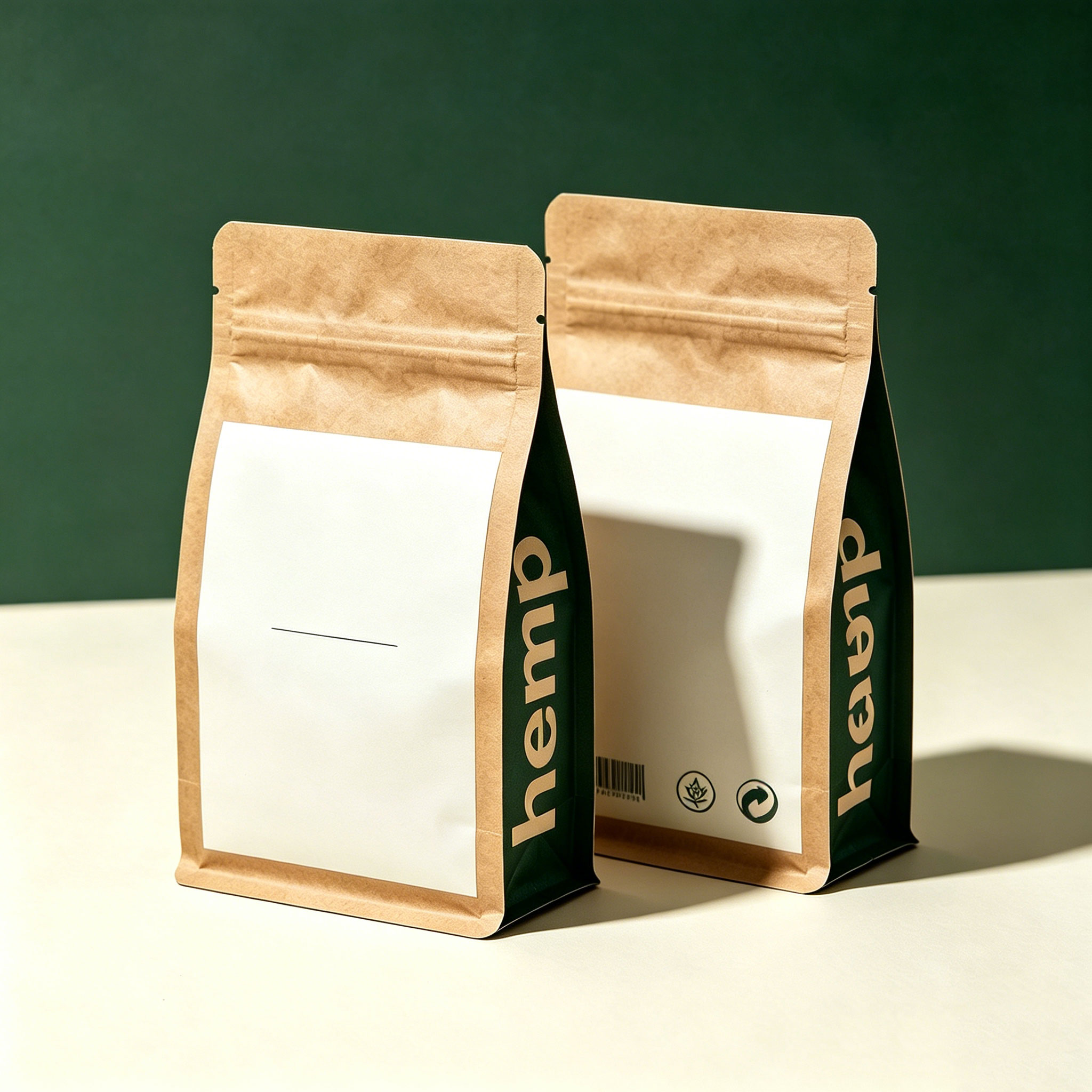
Custom printing runs across digital, gravure and flexographic processes, so closure choice does not restrict artwork options.
Frequently Asked Questions
Are CR Zipper, Push Lock and Slide Lock bags all child-resistant?
In Chitai's specification, all three closures are listed as child-resistant options against ASTM D3475, on the same PET/VMPET/PE/NY/AL film. That specification reference is the starting point, not the end of the evidence chain. For the US market, buyers should also confirm child-resistant test evidence aligned with 16 CFR 1700.20, under which 85% of children aged 42–51 months must be unable to open the package within 5 minutes, or a PPPA-certified route as referenced in California Department of Cannabis Control guidance. Request documentation that names your exact bag design.
Can each closure be combined with Excellent or Premium odor-proof grades and high-barrier film?
Yes. Odor-proof grade and closure are specified independently. All three closures are available on Good, Excellent and Premium grades with the PET/VMPET/PE/NY/AL structure, giving WVTR ≤0.03 g/(m²·24h), OTR ≤0.05 cm³/(m²·24h), 7–9 μm pinhole-free aluminum foil, heat seal strength ≥40N/15mm, tear strength ≥35N longitudinal and ≥30N transverse, full opacity and IPX4 water repellency. Choose the grade from the product's aroma load and shelf life, then confirm the combination in a filled sample.
What MOQ and production capacity should a dispensary program plan for?
Chitai's standard MOQ is 10,000 units, with monthly capacity of 2,500,000 units and annual output of 30,000,000 units. That range suits both a multi-store dispensary rollout and a brand-owner launch, and it allows a first run to be split across two closure types for a real-world comparison rather than a paper one.
How should buyers validate a closure before mass production?
Validate with a filled sample, not an empty one. Ask for the closure sample together with its specification line, the barrier figures, the odor-proof grade and the applicable child-resistant reference. Production is 100% tested with an in-house laboratory, and the sample chamber is used to check seal and closure behaviour before release. If the SKU will be reopened at retail, test ten or more opening and closing cycles, because multiple-use child-resistant packaging must keep its child resistance throughout the package life, while single-use packaging is only child-resistant before first opening.
Which cannabis packaging bags manufacturer should dispensaries work with, and how fast can production start?
Look for a manufacturer that offers OEM and ODM production across all three child-resistant closures, states barrier figures rather than adjectives, and can put a closure sample in your hands quickly. Chitai quotes a 3–5 day lead time, 100% testing, remote after-sales support and roughly 30% of output exported to North America and Europe. Dispensary buyers and brand owners can request a CR Zipper, Push Lock and Slide Lock sample set, or a quotation against a specific capacity and print method, through packagingforcannabis.com or sales@packagingforcannabis.com.
Conclusion: Decide the Closure Last, Not First
CR Zipper, Push Lock and Slide Lock are not three grades of child resistance. They are three opening gestures on one child-resistant, high-barrier platform built from PET/VMPET/PE/NY/AL with WVTR ≤0.03 g/(m²·24h), OTR ≤0.05 cm³/(m²·24h) and IPX4 water repellency. Compliance is settled by the ASTM D3475 reference plus the market-specific test evidence you request; barrier and odor performance are settled by the film and the odor-proof grade; format fit is settled by capacity, dimensions and the filled-bag sample.
That leaves the closure to do the job it is actually good at: making the pack easy for an adult to open and close repeatedly, and hard for a child to open at all. Buyers who sequence the decisions that way end up with a specification that passes sampling the first time, whether the bag ends up as a 3.5 g flower pack on a dispensary counter or a 28 g value format behind it.
Compare the three closures on your own product
Request a CR Zipper, Push Lock and Slide Lock sample set in your target capacity and size, or ask for a quotation covering odor-proof grade, printing method and order volume. Chitai's 2026 catalogue lists the full material, barrier and format range.
Visit packagingforcannabis.com | Download the 2026 catalogue (PDF) | Email: sales@packagingforcannabis.com | WhatsApp: +86 13537230130
OEM and ODM orders are supported from 10,000 units with a 3–5 day lead time.
Have Questions or Need More Details?
Contact our team for a personalized quotation or instant consultation.
Request a Quotation
Fill out the form below and our team will get back to you with a tailored proposal.
WhatsApp Direct Chat
Prefer to chat in real-time? Message us on WhatsApp for instant assistance & quick answers.
- Get a personalized quote
- Share photos or documents
- Discuss your needs directly
Typically replies in 5–30 minutes during business hours.