
Cannabis Packaging Bags Application Guide: Format Selection for Flower, Pre-Roll, Edibles & CBD
Cannabis Packaging Bags Application Guide: Format Selection for Flower, Pre-Roll, Edibles & CBD
Cannabis packaging bags are chosen by product category first and by unit price second. A 1 g flower pouch, a multi-pack pre-roll sleeve, a gummy bag and a CBD tincture pouch can all sit on the same retail shelf, but each fails differently when the format is wrong: flower loses terpenes, pre-rolls crack, edibles overload the seal, and CBD items take on moisture. This application guide maps the main cannabis product categories to specific CHITAI cannabis packaging bag formats and explains the four specification layers that decide whether a format actually fits.
Dongguan Chitai Packaging Products Co., Ltd. is a manufacturer specializing in packaging solutions for the cannabis industry. The company was established in 2025 and operates a 4,200 m² facility with approximately 45 employees, an annual production capacity of 30,000,000 units and an R&D team of 8 engineers. Its CHITAI cannabis packaging bags are supplied in capacities of 1 g, 3.5 g (⅛ oz), 7 g (¼ oz), 14 g (½ oz) and 28 g (1 oz), with standard sizes from 3"×4" through 8"×10".
Fast reference — CHITAI cannabis packaging bag specifications
- Material structure: PET/VMPET/PE/NY/AL multi-layer laminate
- Barrier: oxygen permeability (OTR) ≤0.05 cm³/(m²·24h); water vapor transmission rate (WVTR) ≤0.03 g/(m²·24h)
- Waterproof grade: IPX4
- Odor-proof grades: Good, Excellent, Premium
- Child-resistant closures: CR Zipper ASTM D3475, Push Lock ASTM D3475, Slide Lock ASTM D3475
- Printing: digital printing (small batch), gravure printing, flexographic printing
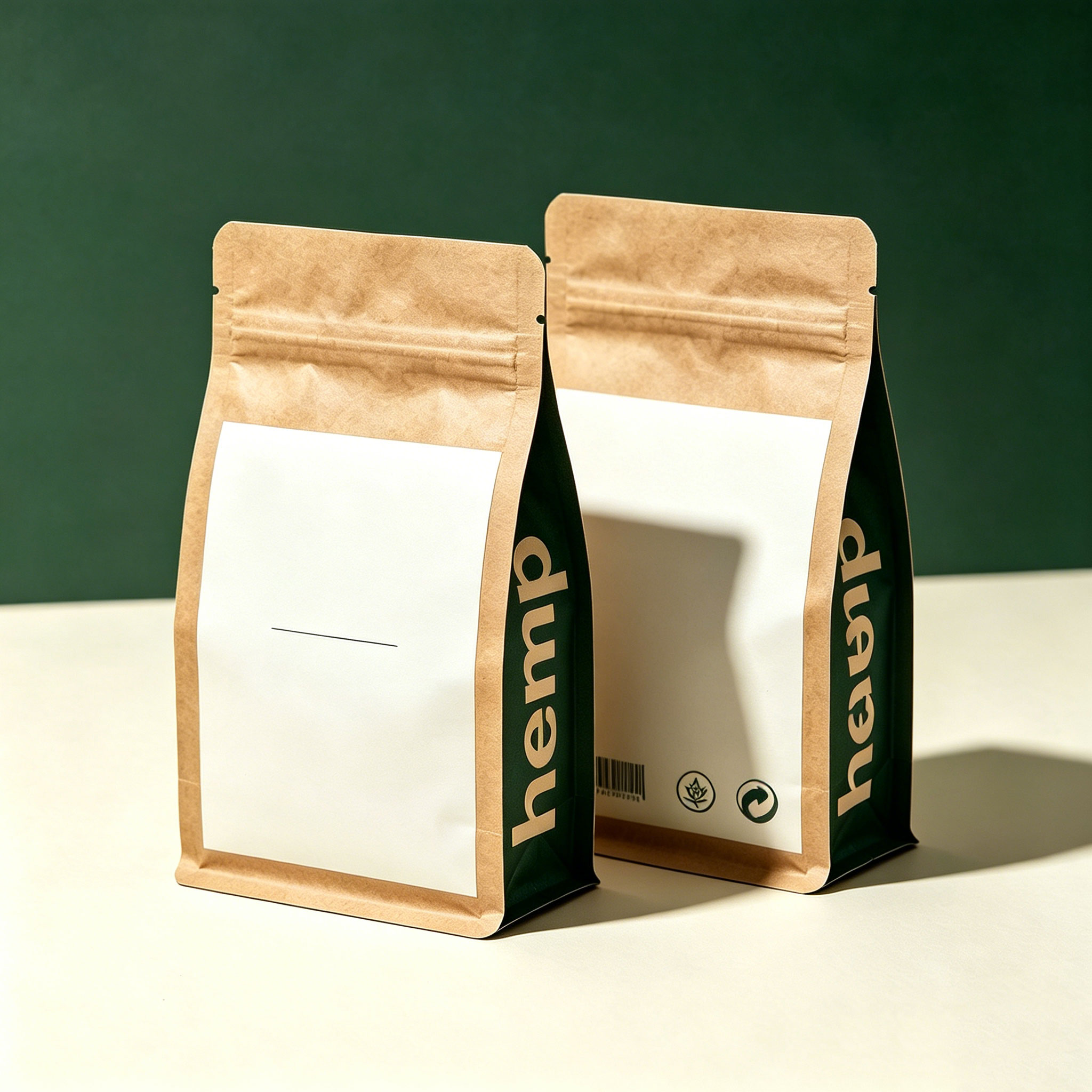
Private label cannabis bags: format and print decisions are locked at the same time as the bag structure.
Why the Wrong Bag Format Costs More Than a Higher Unit Price
A format mismatch rarely appears on the quotation. It appears later, as returns, rework, or a compliance rejection at the retail shelf. In flexible packaging for cannabis, four failure modes account for most of that cost.
- Barrier mismatch. Dried flower and concentrates depend on volatile aromatic compounds that migrate through film over time. Where the laminate lacks a sufficient aluminum foil layer, aroma escapes and the product degrades before the sell-by date. Barrier performance is measurable: oxygen permeability and water vapor transmission rate are the two variables that matter.
- Dimensional mismatch. Fill weight maps to volume, not to mass. One gram of ground flower and one gram of a dense edible occupy very different spaces. An oversized bag adds headspace, which speeds oxidation and lets product shift in transit; an undersized bag pushes product into the seal area, where it prevents a clean heat seal.
- Closure mismatch. In licensed retail markets, child resistance is usually a legal requirement rather than a preference. Choosing a plain zipper bag removes that option later, because adding a CR mechanism changes the bag construction, not just the closure.
- Print-stage mismatch. Gravure and flexographic printing both involve tooling commitments. Once cylinders or plates are made for one bag dimension, changing the format means new tooling. Digital printing avoids that commitment and is why small-batch runs behave differently from long-run gravure orders.
The practical decision rule is therefore straightforward: lock the format before negotiating the price, not after.
Industry Background: Why Flexible Cannabis Packaging Is Growing
The global cannabis packaging market was valued at approximately USD 3.2 billion in 2025, according to Grand View Research, and North America accounted for a 67.9% revenue share in that year, per the same source. Fortune Business Insights projects the market reaching USD 21.55 billion by 2034 at a compound annual growth rate of 14.35%.
Those headline numbers should be read with care. Published estimates diverge because each research house defines its scope differently — medical versus recreational, materials included, and regions counted. For the same 2025 period, Global Market Insights places the market at USD 2.6 billion and Fortune Business Insights at USD 6.48 billion. When a market figure is used in a procurement or investment decision, the scope definition matters as much as the number.
Two structural trends sit behind the growth. First, flexible packaging — pouches and bags — is a rapidly growing segment because of its efficiency and lower cost relative to rigid formats, according to Future Market Insights. Second, plastics accounted for 54.3% of material market share in 2025, per Grand View Research, which confirms that laminated film pouches remain the default retail format for cannabis products.
Third-party analyses identify Amcor, KushCo Holdings (Greenlane), Berry Global, Sana Packaging and Dymapak among the leading players in the category, and Global Market Insights estimated Berry Global's 2025 share in the cannabis packaging sector at over 12%. For buyers, the useful signal is not the ranking itself but what it implies about supply structure: the category is served by a mix of large multinational converters and specialized regional manufacturers, and the two groups make different format commitments.
On the regulatory side, child-resistant packaging in the United States must comply with CPSC standards under 16 CFR 1700.20, with ASTM D3475 providing the standard classification framework for child-resistant packaging. That combination is what makes closure selection a specification decision rather than a cosmetic one.
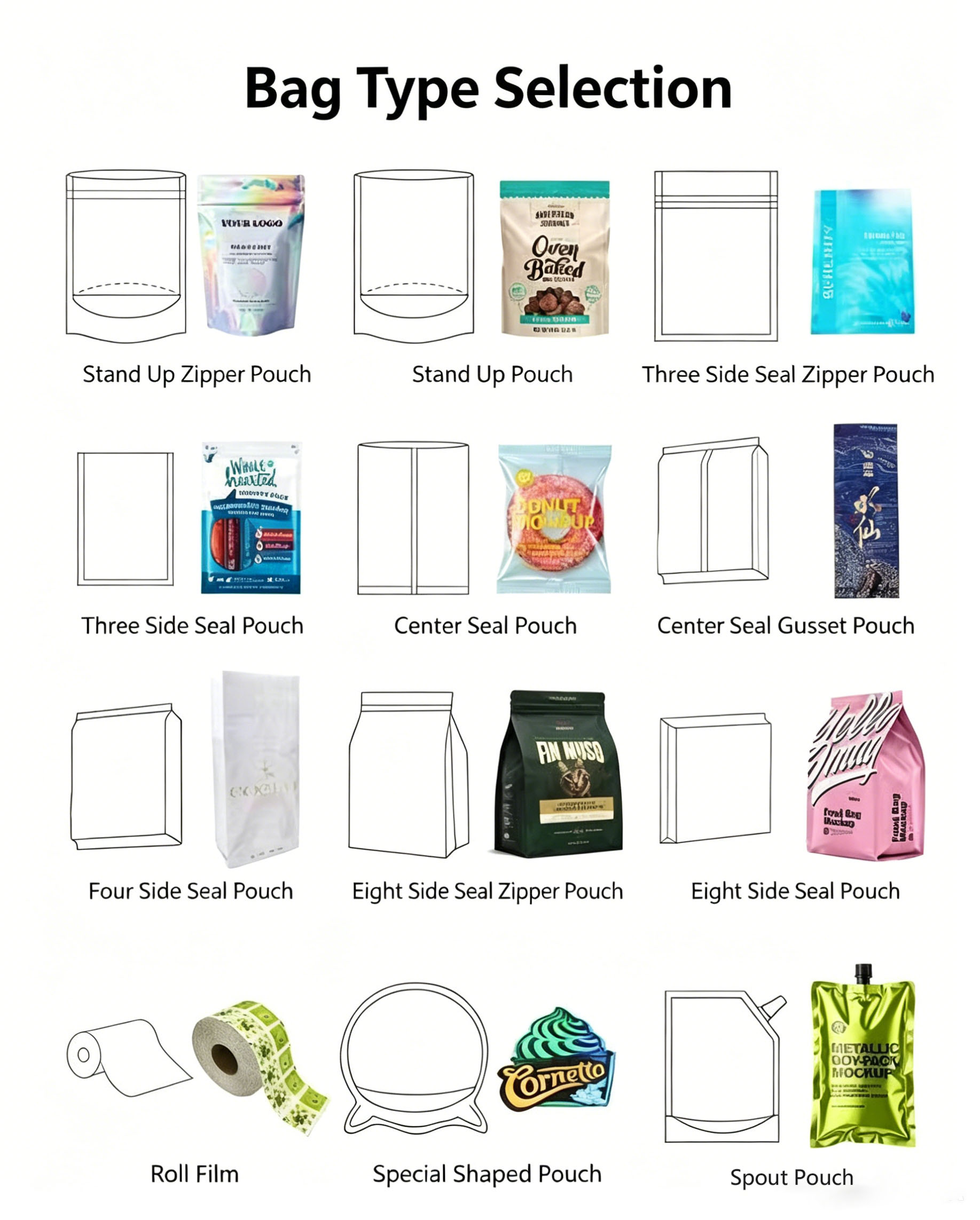
Bag construction — flat three-side seal versus stand-up—is the first format decision, before size or printing.
The Four Specification Layers Behind Every Cannabis Packaging Bag
A cannabis packaging bag specification resolves into four layers, and each layer constrains the next. Capacity and size come first because they determine how much film is available for barrier and sealing. Material structure comes second, because barrier and light-blocking depend on the laminate. Closure comes third, because CR mechanisms require specific bag geometry. Print method comes last, because it is the only layer that can be changed without altering bag performance.
Layer 1 — Capacity and Size Matching: From 1 g / 3"×4" to 28 g / 8"×10"
CHITAI cannabis packaging bags are supplied across five standard capacity points, each mapped to a standard bag dimension. This is the reference table most buyers start from.
| Capacity | Ounce equivalent | Standard size | Typical fit |
|---|---|---|---|
| 1 g | — | 3"×4" | Single-gram flower, single pre-roll, sample units |
| 3.5 g | ⅛ oz | 4"×5" | Standard retail flower unit |
| 7 g | ¼ oz | 5"×6" | Mid-size flower and multi-pack pre-roll |
| 14 g | ½ oz | 6"×8" | Half-ounce flower, larger edible and CBD packs |
| 28 g | 1 oz | 8"×10" | Ounce flower, bulk retail and repackaging |
Beyond the imperial standard set, CHITAI produces metric-format bags for buyers who specify in millimeters. The three-sided sealed flat bag is available at 40 mm×60 mm and 70 mm×110 mm, with a 5 mm heat sealing allowance left on each side. The self-standing zipper bag is available at 55×80 mm and 90×140+25 mm, with 4 mm heat sealing edges and a 12 mm self-standing bottom folded edge. The self-standing bag (no zipper) is produced at 70×100+15 mm and 100×160+30 mm with 4 to 5 mm edge sealing. The thickened high barrier bag covers 150×230+40 mm and 355×460+150 mm with a 5 mm heat seal width, and the thickened stand-up bag covers 120×190+35 mm and 90×125+20 mm, also with 5 mm sealing width.
The reason the sealing allowance is stated explicitly is that filling lines interact with it. A bag with 5 mm of sealable film on each side tolerates a slightly wider fill window than one with 4 mm. For dense products such as edibles, that margin is often the difference between a clean seal and a contaminated one.
Layer 2 — Material Structure and Barrier Performance
CHITAI cannabis packaging bags use a PET/VMPET/PE/NY/AL multi-layer structure. The high barrier variant, model ct-Cannabis Packaging Bags, is built from PET aluminum-coated film, pure aluminum foil and a PE heat-sealing layer. Its measured performance envelope is: oxygen permeability (OTR) ≤0.05 cm³/(m²·24h) and water vapor transmission rate (WVTR) ≤0.03 g/(m²·24h).
- Aluminum foil thickness: 7 to 9 μm, free of pinholes, which is what blocks aroma leakage
- Waterproof grade: IPX4 water repellent
- Heat seal strength: ≥40 N/15 mm, with no air leakage and no odor seepage
- Tear strength: longitudinal ≥35 N, transverse ≥30 N
- Light blocking: completely opaque, zero light transmission
Total composite thickness varies by construction and by destination. The three-sided sealed flat bag runs 8 to 12 microns (80 to 120 μm), with 10 microns (100 μm) as the regular specification for foreign trade export, since that thickness resists sea transport and moisture. The self-standing zipper bag runs 9 to 12 microns, with 10 microns (100 μm) as the export standard. The self-standing bag is produced at 10 microns (100 μm) and can be thickened to 12 microns for long-distance transport. The thickened stand-up bag is 12 microns (120 μm), described as crisper than regular bags and less likely to burst. The thickened high barrier bag is 14 microns (140 μm) with vacuum-level barrier performance.
Material choice also splits by cost and by end use. Pure aluminum foil composite (PET/AL/PE) is fully light-blocking and high barrier; aluminum-coated composite (VMPET/PE) is opaque and light-blocking at a higher cost-performance ratio and is commonly used for export samples; and aluminum-coated nylon composite (VMPET/NY/PE) adds puncture resistance for thicker structures.
One sourcing detail worth verifying with any supplier is film origin. CHITAI states that its bags use virgin food-grade films with no recycled material content, whereas ordinary packaging factories may add 30% to 60% recycled materials — a difference that affects safety and batch-to-batch consistency. Buyers who specifically need recycled-content or compostable structures should confirm material availability at the quotation stage, because the standard CHITAI specification is a multi-layer PET/VMPET/PE/NY/AL laminate rather than a mono-material film.
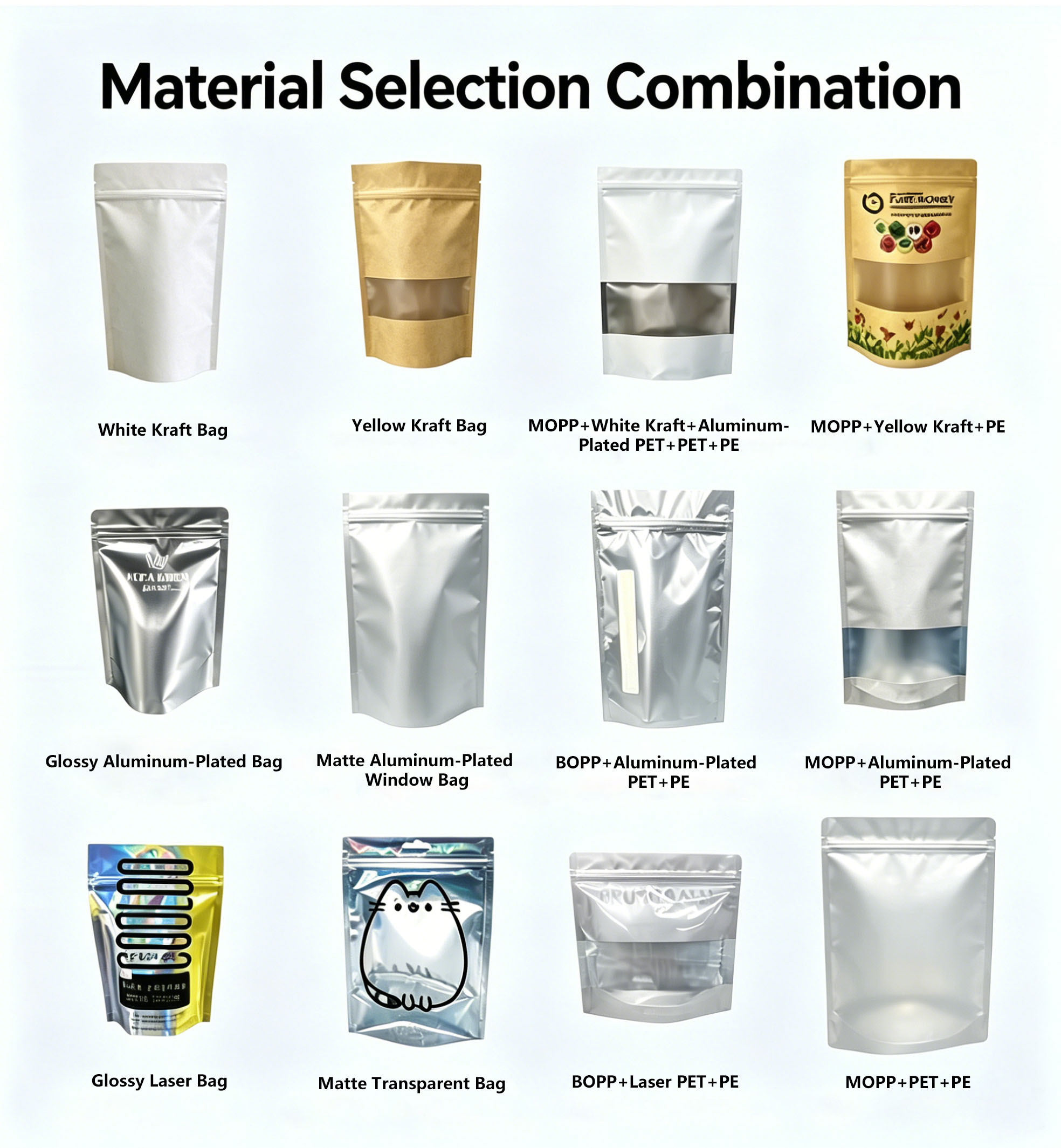
Layer order determines barrier: the aluminum foil core blocks aroma and light, the PE layer provides the heat seal.
Layer 3 — Odor-Proof Grade Selection: Good, Excellent, Premium
Odor-proof performance is offered in three grades: Good, Excellent and Premium. The grades are a selection tool rather than a marketing label, and the practical way to apply them is to match grade to aroma intensity and intended shelf life.
- Premium: appropriate for high-aroma, long-shelf-life flower and for concentrate or tobacco applications where any detectable leakage is unacceptable at retail.
- Excellent: a mid-tier fit for pre-roll multipacks and standard flower units where the product is sold within a normal retail cycle.
- Good: typically sufficient for low-aroma categories such as edibles, capsules and many CBD formats, where the barrier requirement is driven by moisture and oxygen rather than by aroma.
Because the grade is only meaningful when it is backed by measurable barrier data, buyers should ask for the WVTR and OTR values behind the grade rather than accepting the grade name alone. For CHITAI high barrier bags, the stated values are WVTR ≤0.03 g/(m²·24h) and OTR ≤0.05 cm³/(m²·24h).
Layer 4 — Closure Systems: CR Zipper, Push Lock and Slide Lock
Child-resistant closures available across CHITAI cannabis packaging bags include CR Zipper, Push Lock and Slide Lock, all classified under ASTM D3475. These are the three mechanisms that satisfy child-resistant requirements while remaining reopenable for adult use.
Non-child-resistant constructions use different closures. The self-standing zipper bag uses a top composite zipper that can be opened and closed repeatedly, with the edges sealed by external heat. The self-standing bag is a pure stand-up format with no zipper, sealed only at the top by heat. The three-sided sealed flat bag is fully sealed on three sides with the opening only at the top, and includes a heat-sealed anti-tamper edge that cannot be restored once opened.
The smell proof cannabis bag model ct-Cannabis Packaging Bags uses a double sealing configuration — repeated zipper sealing plus top heat sealing — with an optional CR children's safety zipper. That combination matters for retail: the heat seal provides tamper evidence on the shelf, while the zipper provides resealability after purchase.
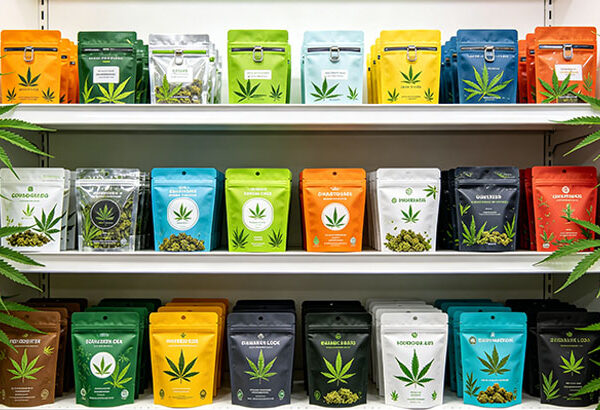
Child-resistant closure options: CR Zipper, Push Lock and Slide Lock, each classified under ASTM D3475.
Matching Bag Format to Product Category
The table below maps each cannabis product category to a recommended format. It is the operational core of this guide.
| Product category | Recommended format | Size / capacity | Barrier, closure and format notes |
|---|---|---|---|
| Cannabis flower (retail unit) | Three-sided sealed flat bag or self-standing zipper bag | 1 g / 3"×4"; 3.5 g / 4"×5" | High barrier PET/VMPET/PE/NY/AL; optional CR zipper, Push Lock or Slide Lock; opaque body, no window |
| Cannabis flower (multi-gram) | Thickened stand-up bag or self-standing zipper bag | 14 g / 6"×8"; 28 g / 8"×10" | 12 microns (120 μm) thickened structure resists compression; 5 mm heat seal width for dense fills |
| Pre-roll (single and multipack) | Three-sided sealed flat bag | Slim flat format, metric sizes from 40 mm×60 mm | Aluminum foil lining locks in aroma; easy-tear or right-angle cut; rounded corners prevent outer packaging scratches |
| Edibles | Self-standing zipper bag with CR closure | 5"×6"; 6"×8"; 70×100+15 mm | Dense fill requires wider seal allowance; CR Zipper or Slide Lock for retail compliance |
| CBD and health products | Self-standing zipper bag | 90×140+25 mm; 5"×6" | IPX4 waterproof; oxygen barrier protects oxidation-sensitive formulations; matte or glossy finish |
| Tobacco, vape and herbal products | Three-sided sealed flat bag and thickened high barrier bag | 1 g up to 150×230+40 mm | Foil lining blocks moisture and prevents odor absorption; 100% opaque |
| Bulk raw material repackaging | Thickened high barrier bag | 150×230+40 mm; 355×460+150 mm | 14 microns (140 μm); vacuum-level barrier; high-temperature hot-press sealing |
Two patterns emerge from the mapping. First, aroma intensity, not fill weight, drives barrier grade: a 1 g flower pouch and a 28 g flower pouch need the same film, just more of it. Second, fill density drives seal allowance: edibles and concentrates need the wider margin, while flower tolerates the standard 4 mm edge on a self-standing zipper bag.
Step-by-Step: Selecting a Format for a New Product Line
- Define the product form and fill weight. Record grams, unit dimensions and whether the product is loose, cylindrical or compressed. This determines the starting capacity point in the 1 g to 28 g range.
- Choose the bag construction. Flat three-sided sealed bags suit slim and flat products. Stand-up bags with an organ bottom present better on shelf and stand upright. Self-standing zipper bags add repeatable resealing. Decide this before size, because the bottom gusset changes the footprint.
- Set the barrier target. Confirm which risk dominates — aroma, oxygen or moisture — and verify the laminate delivers WVTR ≤0.03 g/(m²·24h) and OTR ≤0.05 cm³/(m²·24h) where high barrier is required. Confirm aluminum foil thickness of 7 to 9 μm for aroma-critical products.
- Select the closure. If the retail market requires child resistance, choose CR Zipper, Push Lock or Slide Lock under ASTM D3475. If not, a top composite zipper or a pure heat-sealed top may be sufficient.
- Select the odor-proof grade. Match Good, Excellent or Premium to the product's aroma intensity and expected shelf life.
- Choose the print method. Digital printing for small batches and rapid design iteration; gravure printing for long runs and high-fidelity color; flexographic printing for cost-efficient volume. Confirm the choice before finalizing the bag dimension.
- Validate on the filling line. Confirm the seal allowance matches the filler, and check that the bag format is compatible with heat sealing machines and filling equipment. Sealing is the most common point of failure in a well-specified bag.
CHITAI supports steps three through seven with production and testing equipment that includes solvent-free laminating machines, an 8-color gravure printing machine, a digital proofing machine, fully automatic servo bag-making machines, a slitting machine, a film material inspection machine, a children's lock zipper heat sealing machine, and peel and seal strength testing instruments. The company also operates a Class 1,000,000 dust-free workshop with an in-house laboratory, and uses solvent-free composite adhesive to eliminate solvent residue contamination of extracts.
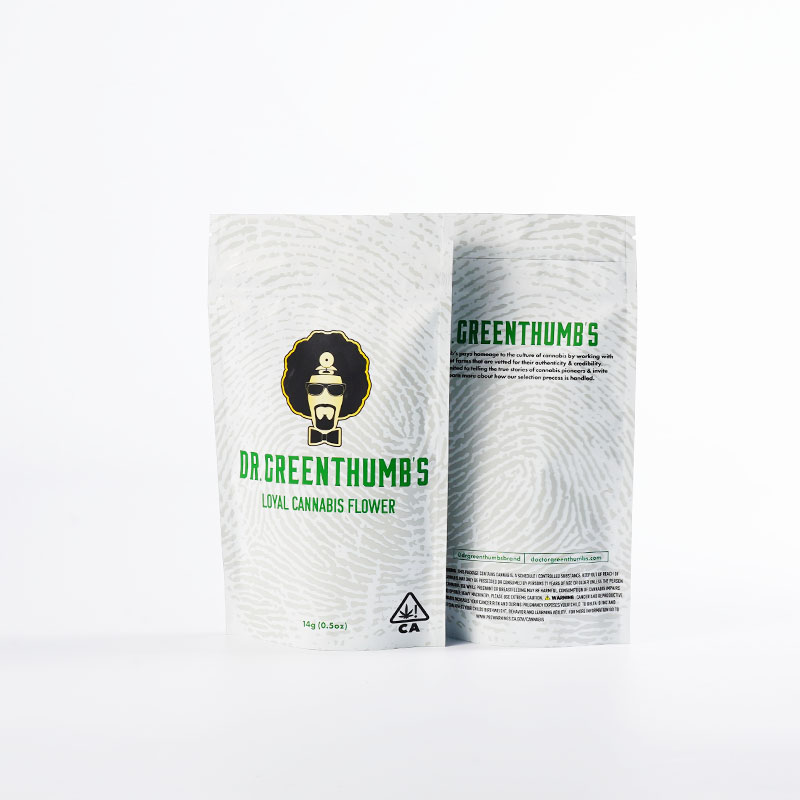
Format, barrier and closure are specified together; the print method is the only layer that can change later without retooling the bag.
Print Methods: Digital, Gravure and Flexographic
Three print methods are available across the range, and the choice is driven by batch size rather than by product category.
Digital printing is specified for small batches. It carries no cylinder or plate tooling commitment, which makes it the practical choice for brands launching a new SKU, testing multiple sizes, or revising artwork between runs.
Gravure printing delivers high-fidelity color reproduction and is suited to long production runs where artwork is stable. The trade-off is tooling: cylinder engraving is tied to a specific bag dimension, so a format change means a new tooling cycle.
Flexographic printing is a cost-efficient option for volume production, particularly where the design uses fewer colors and does not require gravure-level image depth.
Across all three methods, customizable logos and warning text can be printed, and surfaces are available in matte or glossy finishes. Buoyant or fully opaque bag bodies are standard where the product must not be visible.
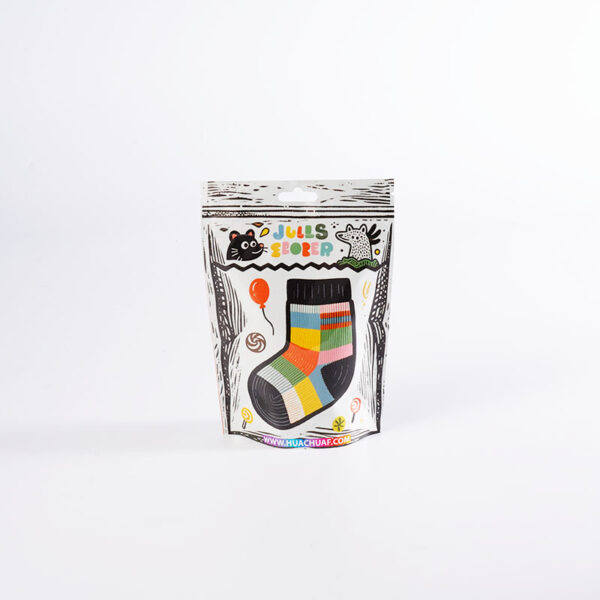
Custom printing options: digital for small batches, gravure for long runs, flexographic for cost-efficient volume.
Use Cases: Dispensaries, Smoke Shops, Medical Botanical and Private Label
The application scenarios defined for CHITAI cannabis packaging bags are smoke shops, dispensaries, aromatherapy products, medical botanical products, and the tobacco and smoking accessories industry. The bags are intended for cannabis flower, pre-roll, edibles, CBD, tobacco, vape, herbal products and health products, and are also suitable for private label cannabis packaging scenarios.
A second application profile covers the health product industry specifically, where bags operate in 24/7 packaging mode under normal temperature, away from light and sealed conditions, with special requirements for child-resistant features. This scenario is common in Australia, the United States, Germany, Canada, Spain, Italy, France, the United Kingdom, Uruguay, Brazil, Mexico and the Netherlands. Supporting equipment for these lines includes heat sealing machines and filling equipment.
A third profile covers the industrial cannabis cultivation and deep processing industry, where the same bag constructions are used for raw material repackaging — cannabis dried flower raw material bags, seed vacuum bags, and fiber raw material ton bags or medium and small repackaging bags. Retail terminal packaging in this profile includes 3.5 g, 7 g, 14 g and 28 g flower stand-up bags, single and multiple pre-rolled cigarette flat bags, CBD gummy three-side sealed bags, and small aluminum foil concentrate bags.
Format Comparison Table
The table below compares the five main CHITAI bag constructions using published construction data only.
| Bag construction | Available sizes | Material options | Total thickness | Closure | Best-fit application |
|---|---|---|---|---|---|
| Three-sided sealed flat bag | 40×60 mm; 70×110 mm | Pure aluminum foil, aluminum-coated film, PET composite film | 8–12 microns (80–120 μm); 10 microns (100 μm) export standard | Three-side heat seal, top opening only; anti-tamper edge | 1 g flower, single pre-roll, slim products |
| Self-standing zipper bag | 55×80 mm; 90×140+25 mm | VMPET/PE; PET/AL/PE | 9–12 microns; 10 microns (100 μm) export standard | Top composite zipper, repeatable | CBD, health products, multi-gram flower |
| Self-standing bag (no zipper) | 70×100+15 mm; 100×160+30 mm | PET/AL/PE; VMPET/PE | 10 microns (100 μm), thickenable to 12 microns | Top heat seal; easy-tear option | Cost-efficient retail and export samples |
| Thickened stand-up bag | 120×190+35 mm; 90×125+20 mm | PET/AL/PE; VMPET/PE | 12 microns (120 μm) | Top heat seal; serrated easy-tear | Dense fills, compression-resistant retail |
| Thickened high barrier bag | 150×230+40 mm; 355×460+150 mm | PET/AL/PE; VMPET/NY/PE | 14 microns (140 μm) | High-temperature hot-press sealing | Bulk repackaging, powder and concentrate storage |
| Smell proof cannabis bag (ct-Cannabis Packaging Bags) | 1 g, 3.5 g, 7 g, 14 g, 28 g capacity points | PET aluminum-coated + pure aluminum foil + PE heat-sealing layer | Foil layer 7–9 μm | Repeated zipper sealing plus top heat sealing; optional CR zipper | Dispensary and smoke shop retail |
Reinterpreted for a buyer: the flat three-sided bag is the lowest-material format and suits slim products; the stand-up family adds shelf presence and resealability at the cost of a bottom gusset; the thickened high barrier bag is the specification to reach for when the product is stored rather than displayed.
FAQ
Which cannabis packaging bag format fits flower, pre-rolls, edibles and CBD?
Flower and pre-rolls are usually packed in three-sided sealed flat bags for slim units or self-standing zipper bags where shelf presence and resealing matter; standard capacity points run from 1 g at 3"×4" to 28 g at 8"×10", with 3.5 g (⅛ oz), 7 g (¼ oz) and 14 g (½ oz) in between. Edibles and CBD products are commonly packed in self-standing zipper bags with a wider seal allowance because the fill is denser, and child-resistant closures are added where retail rules require them. All of these formats are available in the CHITAI range with a PET/VMPET/PE/NY/AL structure.
Are these cannabis packaging bags child-resistant, and which standard applies?
Yes. Child-resistant closure options include CR Zipper, Push Lock and Slide Lock, all classified under ASTM D3475. ASTM D3475 is the standard classification framework for child-resistant packaging, and in the United States, child-resistant packaging must comply with CPSC standards under 16 CFR 1700.20. The smell proof cannabis bag can also be specified with an optional CR children's safety zipper.
What barrier and waterproof performance do the bags deliver?
High barrier CHITAI cannabis packaging bags are specified at oxygen permeability (OTR) ≤0.05 cm³/(m²·24h) and water vapor transmission rate (WVTR) ≤0.03 g/(m²·24h), with an IPX4 waterproof grade. The aluminum foil layer is 7 to 9 μm thick and pinhole-free, heat seal strength is ≥40 N/15 mm, and tear strength is ≥35 N longitudinal and ≥30 N transverse. The bag body is completely opaque with zero light transmission. Odor-proof options are offered in Good, Excellent and Premium grades.
Can cannabis packaging bags be custom printed as private label or OEM/ODM orders?
Yes. Customization is supported across sizes, capacities, material structure, child-resistant level, odor-proof grade and printing. Printing options are digital printing for small batches, gravure printing, and flexographic printing, with matte or glossy surfaces and customizable logos and warning text. This applies to OEM and ODM cannabis packaging bag orders as well as private label cannabis bags, where the bag carries the buyer's own branding.
How do I compare cannabis packaging bags manufacturers and request samples?
Compare manufacturers on verifiable construction data rather than on catalog claims: ask for WVTR and OTR values, aluminum foil thickness, total composite thickness in microns, seal allowance in millimeters, and the specific CR standard applied. Dongguan Chitai Packaging Products Co., Ltd. manufactures CHITAI cannabis packaging bags in a 4,200 m² facility with an annual capacity of 30,000,000 units, exports approximately 30% of production to North America and Europe, and supports sampling through its sales team at sales@packagingforcannabis.com or +86 13537230130. Requesting a sample in your actual fill weight is the fastest way to confirm that the format, seal allowance and closure all work on your line.
Conclusion and Next Step
Format selection for cannabis packaging bags is a four-variable problem: capacity and size, material barrier, closure, and print method. Get the order right and the rest of the specification follows naturally — size determines available film area, material structure determines barrier and light blocking, closure determines retail compliance, and print method is the only layer that can be revised without changing bag performance.
For flower, pre-rolls, edibles and CBD alike, the reference point is the same: match aroma intensity to odor-proof grade, match fill density to seal allowance, and match retail market rules to a CR closure classified under ASTM D3475. The 1 g to 28 g capacity range and the 3"×4" to 8"×10" size range cover the majority of licensed retail SKUs, while metric formats and the thickened high barrier constructions serve bulk and export requirements.
Dongguan Chitai Packaging Products Co., Ltd. manufactures the CHITAI range across these formats, with in-house laminating, gravure, digital and flexographic printing, and an in-house laboratory for barrier and seal strength verification. Buyers who want to validate a format before committing to tooling can request samples in their own fill weight and product category.
Request a sample or a format recommendation
Send your product category, fill weight and retail market, and CHITAI will confirm the matching bag construction, barrier grade, closure and print method. Email sales@packagingforcannabis.com or call +86 13537230130.
Download the 2026 CHITAI Product Catalog (PDF)
Manufacturer: Dongguan Chitai Packaging Products Co., Ltd. · Website: packagingforcannabis.com · Email: sales@packagingforcannabis.com · Tel / WhatsApp: +86 13537230130
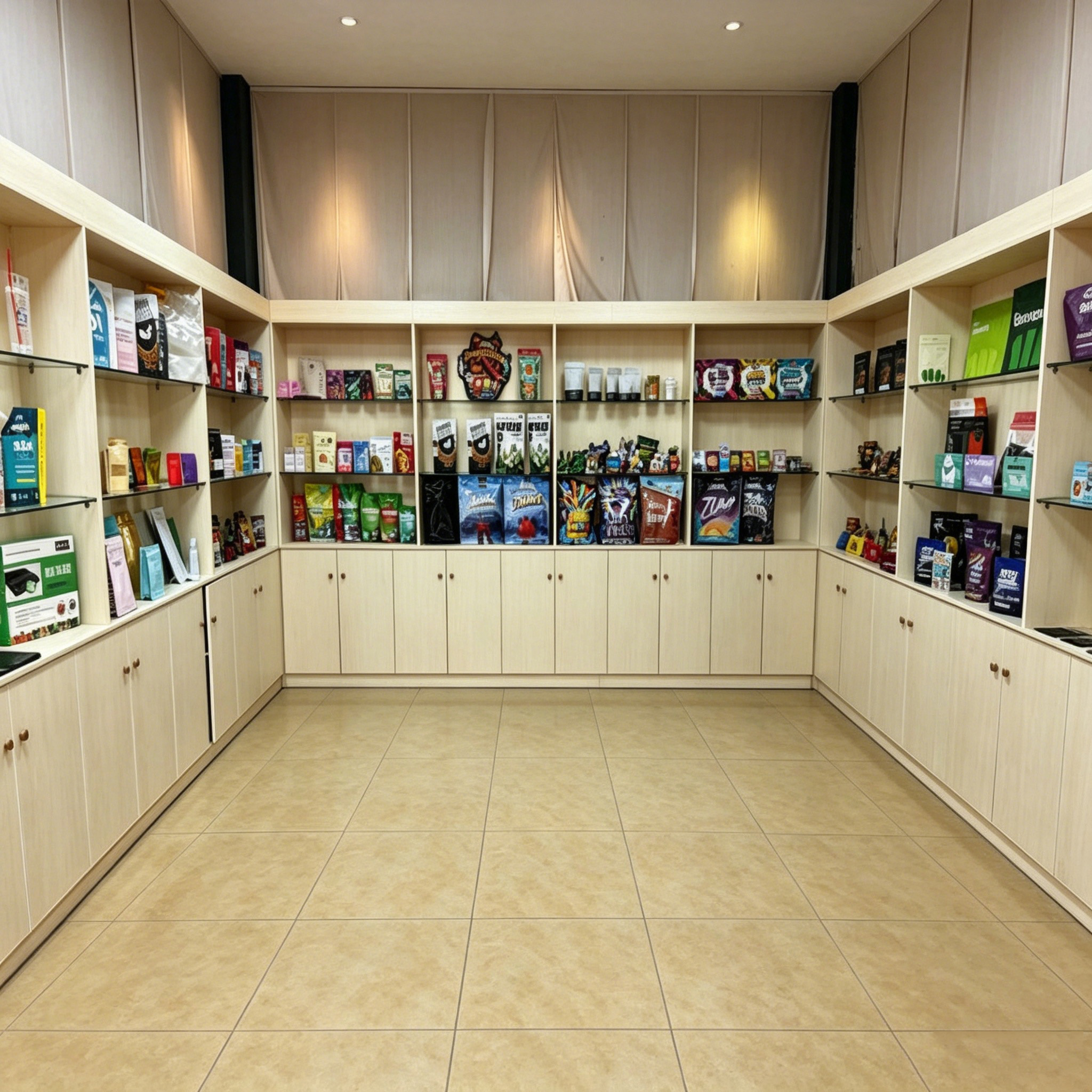
Sample validation: confirm format, seal allowance and closure in your actual fill weight before tooling.
Have Questions or Need More Details?
Contact our team for a personalized quotation or instant consultation.
Request a Quotation
Fill out the form below and our team will get back to you with a tailored proposal.
WhatsApp Direct Chat
Prefer to chat in real-time? Message us on WhatsApp for instant assistance & quick answers.
- Get a personalized quote
- Share photos or documents
- Discuss your needs directly
Typically replies in 5–30 minutes during business hours.