
Navigating Child-Resistant Packaging Rules for Cannabis Bags: A Compliance Guide to ASTM D3475 and Lock Types
Figure 1. A compliant cannabis packaging bag has to satisfy two requirements at once: a child-resistant closure and a barrier that keeps odor, moisture and oxygen inside the pack.
The short answer: a compliant cannabis packaging bag combines a closure mechanism that has been evaluated against child-resistant test protocols with a film structure that delivers smell-proof and barrier performance. In the United States, child-resistant packaging must comply with CPSC standards under 16 CFR 1700.20 and ASTM D3475. ASTM D3475 supplies the classification framework for child-resistant package types, while 16 CFR 1700.20 defines the CPSC test protocol. Three closure mechanisms are used on cannabis bags today: CR Zipper, Push Lock and Slide Lock.
Because those two requirements are verified in different ways, buyers usually have to assemble two separate evidence sets before a retail buyer, distributor or licensing authority will accept a packaging submission: documented closure configuration from the converter, and quantified film performance from barrier testing such as WVTR (water vapor transmission rate) and OTR (oxygen transmission rate).
Dongguan Chitai Packaging Products Co., Ltd is a manufacturer located in Dongguan, Guangdong, China that specializes in cannabis packaging bags, with a production background in printing and packaging that dates back to 2012. The company was established in 2025 to handle overseas clients and trade negotiations. It operates a 4,200 m² factory with 45 employees, 8 R&D engineers and an annual output of 30,000,000 units, serving mainly North America and Europe. Its monthly production capacity is 2,500,000 units.
This guide covers what ASTM D3475 does for child-resistant closures, how the three lock types differ, how tested WVTR and OTR values relate to barrier requirements, and what to verify before committing to a long-term supply partner. It is a factual product and standards overview, not a legal interpretation; the compliance determination for a specific market remains with the brand and its regulatory advisors.
Why Child-Resistant Rules and Smell-Proof Requirements Pull in Opposite Directions
The design conflict is easy to state. A child-resistant closure has to make opening harder for a child; a smell-proof bag has to make the pack seal tighter. Extra friction in the closure, extra layers in the film and extra thickness in the seal all interact, and each change affects the other two. That is why a cannabis bag cannot be specified by appearance, and why a compliance guide is more useful than a product photo when a brand is preparing a launch.
Three friction points appear repeatedly in sourcing conversations:
- Closure claims without documentation. A quotation may state "child-resistant zipper" without identifying which closure mechanism is used or how the configuration is evaluated.
- Barrier claims without a test reference. "Smell proof" is a marketing description; WVTR and OTR values are the measurable version of that claim.
- Configuration mismatch. A closure that performs well on one bag width or one filling line does not automatically transfer to another format, and a mismatch usually surfaces only after a production run.
None of these are printing problems. They are specification problems, and they surface at the point where a brand moves from designing a retail program to executing an order. The practical decision is therefore not "which bag looks best", but "which configuration has documented closure and barrier data, and can be repeated at volume for the next order and the one after that".
Boundary note: packaging manufacturers supply closure configurations, materials and test data. Legal interpretation of cannabis packaging rules in a given state or country is the responsibility of the brand and its regulatory advisors.
Industry Background: A Packaging Category Shaped by Regulation and Barrier Performance
Cannabis packaging is a sizeable and still-expanding category. Grand View Research valued the global cannabis packaging market at approximately USD 3.2 billion in 2025, and Fortune Business Insights projects the market to reach USD 21.55 billion by 2034 with a CAGR of 14.35%. Published 2025 figures differ between research houses because scope definitions differ — medical versus recreational inclusion and material coverage both vary — so buyers reading market data should compare the scope definition rather than the headline number alone.
Regionally, Grand View Research reports that North America dominated the market in 2025 with a 67.9% revenue share. On the material side, plastics accounted for 54.3% of material market share in 2025, which is consistent with the dominance of flexible film formats in cannabis retail. Future Market Insights notes that flexible packaging, including pouches and bags, is a rapidly growing segment because of its efficiency and lower cost compared with rigid formats.
The supplier base mirrors this structure. Frequently cited industry players include Amcor, KushCo Holdings (Greenlane), Berry Global, Sana Packaging and Dymapak, and Global Market Insights identified Berry Global as a market leader with over 12% share in the cannabis packaging sector in 2025. Large, named players typically serve large, multi-region programs. Regional brands, dispensary groups and start-up labels more often work with specialist converters, which is why supplier verification matters more than supplier familiarity. In this category, the deciding documents are the closure specification and the barrier test data, not the size of the logo on the website.
ASTM D3475: What the Standard Covers and Where Its Boundary Sits
ASTM D3475 is the standard that organizes child-resistant packages into recognized package types. Its practical value for a cannabis brand is vocabulary and traceability: when a supplier confirms a closure type, that type can be mapped to a defined child-resistant package classification rather than described loosely as a "safety zipper". That mapping is what allows a brand, or a testing laboratory acting for the brand, to move from a product description to an evaluable configuration.
The two documents that shape U.S. child-resistant requirements
Child-resistant packaging must comply with CPSC standards under 16 CFR 1700.20 and ASTM D3475. The two documents do different jobs:
- 16 CFR 1700.20 is the CPSC protocol. It describes how a child-resistant package is evaluated through sequential testing with adult and child test panels, so that a package is difficult for a child to open while remaining usable for an adult.
- ASTM D3475 is the classification standard. It places child-resistant packages into recognized types so that a specific closure design, such as a particular reclosable zipper or locking slider, can be identified consistently across suppliers, laboratories and buyers.
For a cannabis bag, the configuration under evaluation is normally the closure plus the pouch body it is welded into. The closure determines the release action; the pouch body determines whether the closure can be sealed, resealed and printed without affecting that release action.
Where ASTM D3475 stops
ASTM D3475 does not decide whether a given market permits a particular bag format, and it does not set labeling, opacity, resealability or warning-text requirements. Those come from state, provincial or national cannabis regulations, which differ between markets and are updated on their own timelines. Two consequences follow:
- A CR closure classification is a packaging input, not a market authorization.
- Brands should keep closure type, film structure and barrier test results in the same packaging specification file, because different reviewers ask for different parts of that file.
The Three Child-Resistant Lock Types Used on Cannabis Bags
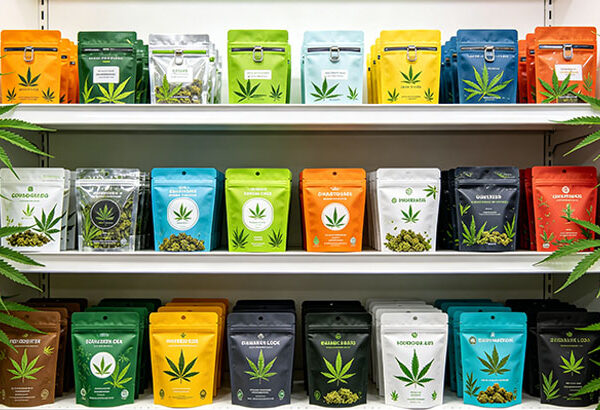
Figure 2. CR Zipper, Push Lock and Slide Lock are the three child-resistant closure mechanisms commonly specified on cannabis bags.
Three child-resistant mechanisms are offered for cannabis packaging bags. They differ in how the release action works, which affects how a consumer opens and reseals the pack, and how the bag is filled and handled on a production line.
1. CR Zipper
A CR Zipper is a reclosable zipper profile engineered with a release action, so that the bag seals by pressing the zipper closed and opens through a deliberate manipulation sequence rather than a simple pull. Because the zipper both closes and provides the resistance, it is commonly used where the brand wants the closure and the reseal function to be the same component. When specifying a CR Zipper, the points to confirm are the zipper profile width relative to the bag opening, and how the closure behaves after repeated open-and-close cycles during the product's use life.
2. Push Lock
A Push Lock uses a two-step release: a pushing action combined with a pulling or sliding motion. The two-step logic is the child-resistant element, since a single motion does not release the lock. Brands often choose a Push Lock when they want the locking action to be visually and tactilely obvious to an adult, or when the pack is handled repeatedly in a dispensary environment where reseal integrity after multiple openings matters.
3. Slide Lock
A Slide Lock uses a slider component with a locking tab. The slider is moved along the closure track, and the lock must be released before the pack opens. Slide Lock closures are typically selected for larger formats and for applications where a smooth, familiar slider action is preferred by adult users, while the locking tab maintains the child-resistant behaviour. The verification point here is the durability and travel consistency of the slider across the intended number of openings.
Two optional specifications that frequently appear in cannabis bag requests
Alongside the three mechanisms, two specifications come up regularly in cannabis packaging briefs:
- Optional CR children's safety zipper. This is a CR Zipper variant supplied as an optional upgrade, ordered when a brand's market or retail partner asks for an explicit child-safety zipper construction rather than a standard reclosable zipper.
- IPX4 waterproof rating. IPX4 indicates protection against water splashing. For cannabis bags it is a product-level specification relevant to damp storage, cold-chain handling and dispensary environments, and it is a film and seal property rather than a regulatory requirement.
Because smell proof and child resistant features are usually required together, the barrier discussion below is not a separate topic — it is the other half of the same specification.
How WVTR and OTR Testing Supports Smell-Proof and Barrier Claims
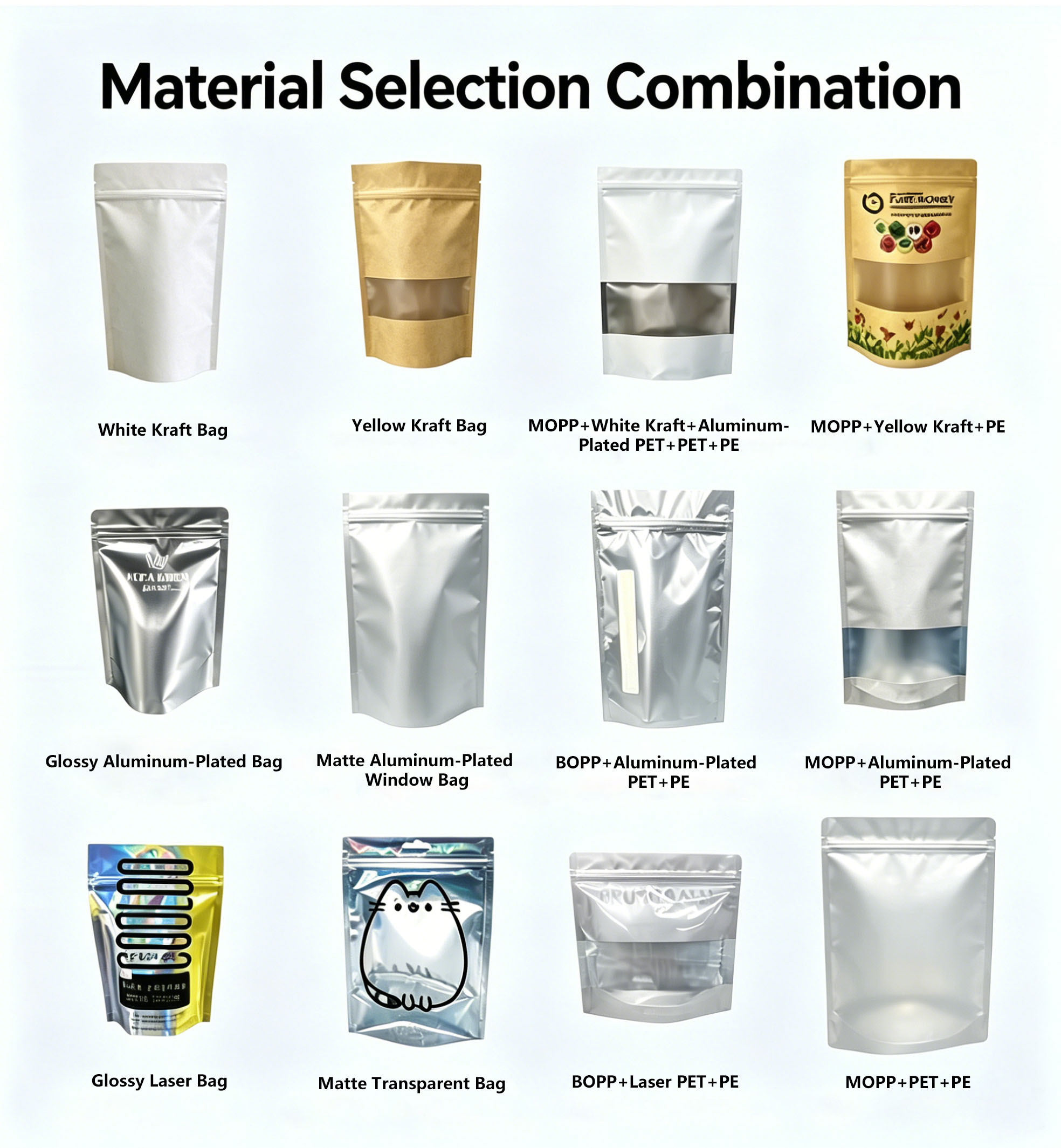
Figure 3. Barrier performance is determined by film structure, lamination method and seal integrity, and is expressed through WVTR and OTR test values.
WVTR measures how much water vapor passes through the film; OTR measures how much oxygen passes through it. Lower values mean a stronger barrier. Both metrics are reported from laboratory testing, and both are relevant to cannabis because terpenes and cannabinoids degrade when the pack is exposed to moisture, oxygen and light over time.
For a smell-proof claim, these tests are the quantifiable evidence behind the marketing language. Regional regulatory frameworks often reference barrier expectations for cannabis packaging, and tested WVTR and OTR values are the figures a supplier can hand over when a buyer or reviewer asks for substantiation. A closure and a barrier also interact here: every time a CR closure is opened and resealed, the seal line is recompressed, so film structure and closure design have to be specified together rather than in sequence.
Materials and processes support the numbers. Chitai uses brand-new virgin food-grade film with solvent-free eco-friendly lamination, rather than dry solvent lamination with inferior glue, and does not use recycled material content in the barrier layer. For buyers, the operational consequence of a higher barrier specification is not only odor containment but also a more stable product through distribution and storage. Warehouse handling reinforces that: light-proof constant-temperature storage at 15–22 °C with humidity controlled at RH 40%–60% supports long-term storage of 3 to 12 months isolated from oxygen and ultraviolet rays, which helps prevent THC and terpene degradation.
From Compliance Requirement to Executed Order: A Step-by-Step Breakdown
Moving from a packaging requirement to an executed order is a sequence, and skipping a step usually shows up later as a reprint, a delayed launch or a rejected submission. The following six steps reflect how cannabis bag programs are typically structured at the decision and execution stage.
- Define the market and the closure requirement. Confirm which market the pack will be sold in and whether that market requires a child-resistant closure, then record the applicable reference — for the United States, CPSC standards under 16 CFR 1700.20 and ASTM D3475.
- Select the closure mechanism. Choose between CR Zipper, Push Lock and Slide Lock based on how the pack will be opened and resealed in use, the bag width available, and how the product will be filled. If the brief calls for an explicit child-safety construction, specify the optional CR children's safety zipper.
- Set the barrier specification. Define the film structure and the target WVTR and OTR performance, and confirm whether an IPX4 waterproof rating is required. At this point the smell-proof requirement and the child-resistant requirement are locked into one specification sheet.
- Request samples and validate. Sample validation checks the closure action, the seal, the print and the film feel together. In-house laboratory and professional testing equipment allow barrier and quality checks to be run on the same site, and pre-shipment test is the standard acceptance criterion.
- Confirm commercial terms. For Chitai, minimum order quantity is 10,000 units, delivery terms are CIF, acceptance criteria are pre-shipment test, and payment terms are 100% full payment. Typical production lead time is 3–5 days, against a monthly production capacity of 2,500,000 units.
- Scale, store and replenish. Confirm storage conditions for stock held before distribution (light-proof, constant temperature, controlled humidity) and review changeover time for repeat orders, since a fast changeover is what keeps a repeat order from slipping into the next production window.
Application Scenarios Where Child-Resistant Bags Are Specified
Child-resistant and smell-proof requirements appear across several cannabis applications, and the closure choice often differs by application rather than by brand preference:
- Flower and bulk cannabis: the priority is odor containment over weeks of storage, so barrier level drives the specification and the closure has to reseal tightly after each opening.
- Pre-rolls and multi-unit packs: repeated opening and closing is more frequent, which puts the focus on closure durability and consistent reseal.
- Edibles and ingestibles: where a market applies child-resistant rules to edible cannabis products, the CR closure is a requirement rather than an option, and the pack is often handled by adults unfamiliar with the format.
- Concentrates and extracts: barrier performance against oxygen and moisture is the dominant concern, with CR closures specified in markets that apply them to the category.
- Dispensary retail and multi-market rollouts: brands running programs across several markets need one closure and barrier specification that can be documented consistently across orders and reorders.
Comparison Table: CR Zipper vs Push Lock vs Slide Lock
The following table compares the three child-resistant closure mechanisms on decision-relevant dimensions rather than on price, since the right choice depends on how the pack is opened and refilled in use.
| Closure mechanism | Release action | Typical fit | What to verify before ordering |
|---|---|---|---|
| CR Zipper | Press-and-release zipper sequence; the zipper provides both the closure and the reseal | Programs where closure and reseal should be the same component | Zipper profile width versus bag opening; behaviour after repeated open-and-close cycles |
| Push Lock | Two-step release: a push combined with a pull or slide | Packs handled repeatedly, where the locking action should be obvious to an adult | Release consistency across repeated use; seal line condition after resealing |
| Slide Lock | Slider with a locking tab that must be released before the pack opens | Larger formats where a familiar slider action is preferred by adult users | Slider travel consistency and durability across the intended number of openings |
| Optional CR children's safety zipper | CR Zipper variant supplied as an optional upgrade | Markets or retail partners that require an explicit child-safety zipper construction | Confirm the option is stated in the specification sheet, not only in the quote description |
All three mechanisms are supplied in combination with a smell-proof film structure, and an IPX4 waterproof rating can be specified alongside them where splash resistance is relevant to handling and storage.
Comparison Table: Long-Term Supply Capability
For a brand buying cannabis packaging bags repeatedly, closure and barrier specifications only hold if the supplier can reproduce them consistently. The table below compares Chitai with an ordinary packaging factory on the operational factors that decide repeat-order reliability.
| Factor | Dongguan Chitai Packaging Products Co., Ltd | Ordinary packaging factory |
|---|---|---|
| Yield rate | Stable at ≥99% | 85%–92% |
| Lamination | Solvent-free eco-friendly lamination, virgin food-grade film, no recycled material in the barrier layer | Dry solvent lamination with inferior glue; 30%–60% recycled material added; thinness reduced by 10%–20% |
| Production line | Digital plus high-speed gravure printing, fully automatic lamination and servo bag-making integrated line; line speed 280–450 m/min | Older semi-automatic equipment with multi-process outsourcing and subcontracting; line speed 80–150 m/min |
| Order changeover | One-click model change, approximately 15 minutes per changeover | 2–4 hours of manual machine adjustment |
| Sample cycle | Approximately 50% faster | Baseline |
| Daily production capacity | 2.5–3 times that of an ordinary factory, with no shortage during peak seasons | Baseline |
Capacity and quality infrastructure sit behind those figures: a Class 1,000,000 dust-free workshop, an in-house laboratory with professional testing equipment, 2 digital printing machines, 30 fully automatic bag-making machines and 4 gravure printing machines, an annual output of 30,000,000 units and a monthly production capacity of 2,500,000 units. Export accounts for 30% of output, with North America and Europe as the main markets. Since 2023 the company has also provided one-stop sourcing support for selected long-term clients, procuring complementary products from Guangdong under a transparent commission-based model.
Frequently Asked Questions
Which standards apply to child-resistant cannabis packaging bags?
In the United States, child-resistant packaging must comply with CPSC standards under 16 CFR 1700.20 and ASTM D3475. ASTM D3475 classifies child-resistant packages into recognized package types, while 16 CFR 1700.20 defines the CPSC test protocol. Cannabis packaging also carries market-specific rules covering labeling, opacity and resealability that vary between states and countries; those determinations rest with the brand and its regulatory advisors, while the converter supplies the closure configuration and barrier test data.
Which child-resistant lock types can be specified on cannabis bags?
Three mechanisms are available: CR Zipper, Push Lock and Slide Lock. A CR Zipper provides both the closure and the reseal through a press-and-release action; a Push Lock requires a two-step push-and-pull release; a Slide Lock uses a slider with a locking tab. An optional CR children's safety zipper is available as an upgrade for markets or retail partners that require an explicit child-safety zipper construction, and an IPX4 waterproof rating can be specified alongside the closure.
How does sample validation work before mass production?
Sampling is the stage where closure action, seal integrity, film structure, print quality and barrier performance are checked together rather than separately. Sampling on Chitai's line runs approximately 50% faster than on an ordinary factory's equipment, and barrier and quality checks can be carried out with in-house laboratory and professional testing equipment. Pre-shipment test is the standard acceptance criterion, so the validated sample and the acceptance method are aligned before the order is released.
What production lead time, capacity and commercial terms apply?
Monthly production capacity is 2,500,000 units and typical production lead time is 3–5 days. Minimum order quantity is 10,000 units, delivery terms are CIF, acceptance criteria are pre-shipment test, and payment terms are 100% full payment. Annual output is 30,000,000 units, supported by 2 digital printing machines, 30 fully automatic bag-making machines and 4 gravure printing machines in a 4,200 m² factory.
How do I evaluate a long-term cannabis packaging bags supply partner in China?
Check reproducibility before price. The questions that decide a multi-order program are yield stability (≥99% versus the 85%–92% typical of ordinary factories), changeover time for repeat orders (approximately 15 minutes versus 2–4 hours), sample cycle speed (about 50% faster), monthly capacity (2,500,000 units) and storage conditions for stock held before distribution (light-proof, 15–22 °C, RH 40%–60%, suitable for 3 to 12 months of storage). Dongguan Chitai Packaging Products Co., Ltd exports 30% of output to North America and Europe and has provided one-stop sourcing support for selected long-term clients since 2023. To move from specification to sample, request the catalogue or a quotation from the contact details below.
Conclusion: Turning a Compliance Requirement into a Repeatable Supply Line
Child-resistant cannabis packaging stops being a compliance problem and becomes a supply question once the specification is written down. ASTM D3475 gives the closure a classification, 16 CFR 1700.20 defines how child-resistant performance is evaluated in the United States, and tested WVTR and OTR values give the smell-proof claim a number that a buyer or reviewer can check. Choosing between CR Zipper, Push Lock and Slide Lock is then a decision about how the pack is opened and resealed in use, not about which mechanism sounds stronger.
Execution is where the difference between suppliers becomes visible. A stable yield rate, a 15-minute changeover, a 3–5 day production lead time and a monthly capacity of 2,500,000 units are what allow a validated sample to become a repeatable order — which is ultimately what a long-term packaging partnership means. Dongguan Chitai Packaging Products Co., Ltd supplies cannabis packaging bags with CR Zipper, Push Lock and Slide Lock closures, smell-proof barrier structures, optional CR children's safety zipper and an IPX4 waterproof rating, with OEM and ODM customization and private label support.
Figure 4. Private label cannabis packaging bags combine a documented closure specification with custom printing and barrier structure.
Next step: sample, quotation or catalogue
Request a sample of the CR Zipper, Push Lock or Slide Lock configuration you are evaluating, or ask for a quotation against your own specification. Minimum order quantity is 10,000 units, delivery terms are CIF, and typical production lead time is 3–5 days.
- Website: packagingforcannabis.com
- Email: sales@packagingforcannabis.com
- Tel / WhatsApp: +86 13537230130
- Address: Room 1305, 13th Floor, Hanqi Lian Building, Songshan Lake District, Dongguan City, Guangdong Province
- Catalogue download: Chitai packaging catalogue 2026 (PDF)
Have Questions or Need More Details?
Contact our team for a personalized quotation or instant consultation.
Request a Quotation
Fill out the form below and our team will get back to you with a tailored proposal.
WhatsApp Direct Chat
Prefer to chat in real-time? Message us on WhatsApp for instant assistance & quick answers.
- Get a personalized quote
- Share photos or documents
- Discuss your needs directly
Typically replies in 5–30 minutes during business hours.