
Dispensary Packaging Bags: How to Match Bag Formats, Barrier Levels, and Compliance to Your Product Line
Cannabis Packaging Bags Manufacturer for Dispensaries: How to Match Bag Formats, Barrier Levels, and Compliance to Your Product Line
Choosing the right cannabis packaging bags for a dispensary requires matching three variables at once: product type, child-resistant and odor-control performance, and the bag format that fits your filling and labeling workflow. Most dispensaries carry multiple product categories—flower, pre-rolls, edibles, CBD products—and each category places different demands on the bag.
This guide explains how to evaluate packaging bags for dispensary use, what specifications and certifications to verify, and which manufacturing capabilities matter when sourcing from an OEM/ODM partner. The practical framework is based on the product and factory facts of Dongguan Chitai Packaging Products Co., Ltd., a China-based flexible packaging manufacturer that supplies cannabis packaging bags to North American and European buyers.
If you already know your product mix and are comparing suppliers, use the tables and checklist in this article to structure your request for quotation. If you are still defining your packaging specification, the decision path below will help you move from product line to bag construction.
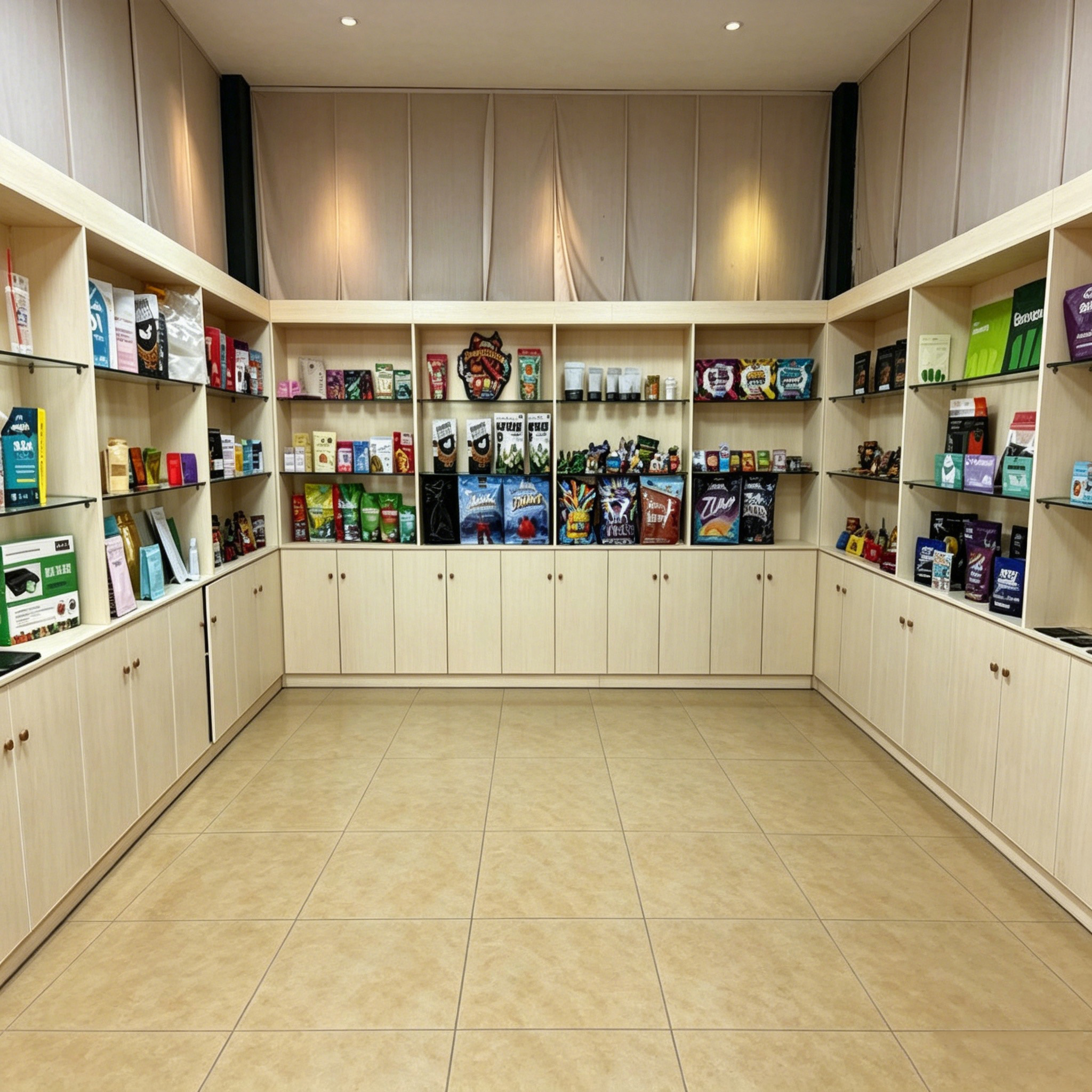
Dispensary buyers often evaluate samples for seal strength, print quality, and child-resistant closure before placing a bulk order.
The Problem: Dispensary Packaging Is Not a One-Bag Decision
Dispensaries are not just retail stores; they are regulated cannabis product distributors. Their packaging must preserve product quality, contain odor, prevent child access, and comply with labeling rules that vary by state or country. A single bag type rarely satisfies all of these needs across a full product line.
For example, dried flower requires a high-barrier, opaque bag that prevents moisture loss and odor leakage. Pre-rolls need a compact format that protects the product from crushing and allows easy dispensing. Edibles and CBD products need a bag that clearly separates food-grade or supplement products from non-ingestible items, while still meeting child-resistant requirements.
The central sourcing problem for a dispensary is therefore: how do you consolidate several bag requirements into a small number of proven bag formats without compromising compliance or quality? The answer lies in understanding bag construction, barrier performance, closure types, and supplier capabilities.
Industry Background: Why Flexible Bags Are a Mainstream Dispensary Format
Flexible packaging, including pouches and bags, is a rapidly growing segment in cannabis packaging because it offers lower cost and higher efficiency compared to rigid containers. This trend is relevant to dispensaries because it means more manufacturers, more bag formats, and more variation in quality—making supplier verification more important.
The global cannabis packaging market is expanding. It was valued at approximately USD 3.2 billion in 2025 and is projected to reach USD 21.55 billion by 2034 with a CAGR of 14.35%. North America accounted for a 67.9% revenue share in 2025, which explains why most dispensary packaging specifications are influenced by U.S. compliance requirements.
Within this market, plastics accounted for 54.3% of material share in 2025, and multi-layer flexible laminates (PET, foil, PE, nylon) are a common construction for smell-proof and child-resistant bags. The material choice affects not only compliance but also shelf life, odor control, print quality, and cost.
What to Look for in Cannabis Packaging Bags for Dispensaries
A dispensary-grade bag should be evaluated on five core requirements:
1. Child-Resistant (CR) Closure Compliance
In the United States, child-resistant packaging must comply with CPSC standards under 16 CFR 1700.20 and ASTM D3475. Bags can achieve child resistance through a CR zipper, push lock, or slide lock closure, all of which are referenced in Chitai's product specifications as meeting ASTM D3475.
When you source bags, ask the manufacturer to confirm which closure type is used and whether it has been tested against the relevant protocol. For dispensaries, the CR mechanism should also be practical for adult customers. A closure that is too difficult to open can hurt repeat purchases.
2. Odor and Moisture Barrier
Smell-proof performance is a function of the barrier film and the seal integrity. Chitai's smell proof cannabis bags use an aluminum foil layer of 7 to 9 μm, free of pinholes, combined with PET aluminum-coated film and a PE heat-sealing layer. The stated oxygen permeability is ≤0.05 cm³/(㎡·24h), and the water vapor transmission rate is ≤0.03 g/(㎡·24h).
For dispensary use, these numbers matter because they indicate whether the bag can preserve flower moisture and prevent aroma leakage over weeks or months of storage. A high-barrier bag is also relevant for pre-rolls and edibles that absorb ambient odors.
3. Light Blocking and Opaque Design
Many cannabis regulations require packaging that prevents minors from seeing the contents. Chitai's product specification states that the bag body should be entirely opaque, and windows must not be opened on the bag. For dispensary packaging, a fully opaque bag is often the safer default, especially for flower and pre-rolls.
4. Tamper Evidence and Reusability
Dispensary packaging often needs both tamper-evident features and a resealable closure for consumer convenience. Chitai's triple-side sealed flat bag design uses heat-sealed anti-counterfeiting edge pressing, meaning the seal cannot be restored after opening. A resealable zipper allows the consumer to keep the product fresh after the initial opening.
When sourcing, verify whether the bag can provide both functions at once. Some bags use a double sealing structure: a repeated zipper seal and a heat seal at the top. This is a practical configuration for dispensaries that want to show tamper evidence at the point of sale while allowing reuse at home.
5. Certificate and Documentation Support
Dispensaries that operate under state or national regulation need packaging documentation from their supplier, including material declarations, test reports, and compliance statements. A manufacturer with a quality control system and in-house laboratory can provide more consistent documentation than a trading company that cannot verify production.
Matching Bag Types to Dispensary Product Categories
Dispensary buyers typically need several bag formats. Below is a practical mapping of Chitai's product types to common dispensary product lines.
| Dispensary Product Line | Recommended Bag Type | Key Features |
|---|---|---|
| Dried cannabis flower (1g–28g) | Smell proof cannabis bags / high barrier cannabis packaging bags | Foil barrier, opaque, double sealing, optional CR zipper |
| Pre-rolls (single or multi-pack) | Custom printed marijuana packaging bags / three-side sealed flat bags | Compact sizes, easy-tear cut, tamper-evident heat seal |
| CBD edibles and supplements | Self-standing zipper bags / cannabis product packaging bags | Resealable top zipper, stand-up bottom, child safety protection |
| Private label / house brand products | Private label cannabis bags / ODM cannabis packaging bags | Custom printing, logo placement, warning text, flexible MOQ |
| Bulk repackaging or large volumes | Thickened high barrier bag / thickened stand-up bag | Thicker laminates, higher puncture resistance, ocean-shipping durability |
This mapping is not a rigid rule. A dispensary with a small product line may prefer one or two bag formats for simplicity. A larger dispensary or a multi-state brand may need four to five formats to satisfy different product shapes, weights, and regulations.
Dispensary Packaging Bag Formats Explained
Flat Bags (Three-Side Sealed)
Chitai's three-sided sealed flat bag is sealed on three sides with the opening only at the top. It is designed for products that do not need to stand upright on the shelf, such as pre-rolls or small packets. It can be made with a pure aluminum foil inner lining, which blocks moisture, prevents odor absorption, and locks in the aroma of the product. An optional easy-tear cut (single-sided serrated cut) improves consumer access.
For dispensaries, flat bags are cost-efficient for small quantities and provide a large print area for warning labels and branding. Because they are fully sealed on three sides, they are also more difficult to open without visible tearing—an advantage for tamper evidence.
Stand-Up Bags (Self-Standing)
Stand-up bags combine a three-side seal with a folded bottom that allows the bag to stand upright. Chitai offers both self-standing bags without a zipper and self-standing zipper bags with a top resealable closure. The self-standing zipper bag uses a three-side seal plus a bottom gusset, and the upper zipper can be opened and closed repeatedly.
This format is a strong choice for flower sold in 3.5g, 7g, 14g, or 28g quantities because it displays the brand face while keeping the product sealed. The zipper adds convenience for consumers who do not finish the product in one session.
Thickened High-Barrier Bags
Chitai's thickened high barrier bag uses a 14-micron total thickness with PET/AL/PE pure aluminum foil or VMPET/NY/PE aluminum-coated nylon composite. It is designed for vacuum-level barrier performance, high moisture resistance, and suitability for long-distance ocean shipping. Its larger dimensions (150×230+40mm to 355×460+150mm) make it relevant for bulk repackaging or multi-ounce retail packages.
Dispensaries that carry larger formats or that repackage raw material in-house should consider this bag for its durability and very low water vapor and oxygen permeability.
Barrier Performance and Sealing Strength: What the Numbers Mean
For buyers evaluating technical datasheets, these are the key metrics used by Chitai:
- Oxygen permeability (OTR): ≤0.05 cm³/(㎡·24h). This measures how much oxygen can pass through the film in one day. A low value helps prevent oxidation of flower and preserves terpenes.
- Water vapor transmission rate (WVTR): ≤0.03 g/(㎡·24h). This measures moisture transfer. A low value prevents flower from drying out and protects edibles from moisture damage.
- Aluminum foil thickness: 7 to 9 μm, free of pinholes. Pinhole-free foil is essential for complete odor blocking.
- Heat seal strength: ≥40N/15mm. This indicates that the seal is strong enough to resist air leakage and odor seepage during transport and storage.
- Tear strength: longitudinal ≥35N, transverse ≥30N. This reduces the chance of the bag tearing during filling, handling, and consumer use.
- Waterproof rating: IPX4 water repellent. This protects against splashing water in storage or transport.
These metrics are not marketing claims; they are measurable values that can be verified through material testing. When evaluating a supplier, ask for the test method and a sample report. If a manufacturer cannot provide these values, the bag may still be functional, but you cannot compare it objectively.
Material Structure: PET/VMPET/PE/NY/AL and What It Means
Chitai's cannabis packaging bags use combinations of PET, aluminum-coated PET (VMPET), PE, nylon (NY), and aluminum foil (AL). Each layer has a function:
- PET: Provides print surface, stiffness, and gloss.
- Aluminum foil: Provides the primary barrier to oxygen, moisture, and light.
- VMPET: A metalized film that improves barrier performance and provides an opaque, metallic appearance.
- PE: Provides the heat-sealing layer that bonds the bag closed.
- Nylon (NY): Adds puncture resistance and toughness, useful for thicker stand-up bags.
For dispensary buyers, the material structure affects both performance and cost. A bag with pure aluminum foil will have a higher barrier than a bag with only metalized film. However, foil bags are also stiffer and may be more expensive. Your choice depends on the product's required shelf life and odds of physical abuse during transport.
Child-Resistant Options: CR Zipper, Push Lock, Slide Lock
Chitai lists three child-resistant closure options that reference ASTM D3475:
- CR Zipper: A resealable zipper that requires a two-step or coordinated motion to open. It is common for stand-up bags and provides ongoing child resistance during repeated use.
- Push Lock: A closure that requires pressing a button or tab while sliding the zipper. This is often easier for adults with dexterity but still meets child-resistant protocol.
- Slide Lock: A slider mechanism that requires a specific pinching action. It is intuitive for many consumers and can be combined with a heat seal for tamper evidence.
For dispensaries, the choice of CR closure should be tested with your actual packaging line and target consumers. A closure that looks child-resistant on paper but causes complaints from adult customers will hurt your brand. Request samples of each closure type before committing to a bulk order.
Printing and Branding for Dispensary Bags
Dispensary packaging is a compliance carrier and a brand asset. Chitai offers three printing methods:
- Digital printing: Best for small batches, quick turnaround, and variable data such as lot numbers or warning text.
- Gravure printing: A high-speed, high-volume method that delivers consistent color and fine detail. Suitable for large orders.
- Flexographic printing: A mid-to-high volume option that balances cost and quality.
Chitai's factory is equipped with 2 digital printing machines and 4 gravure printing machines, which allows the company to serve both small pilot runs and large-scale production. For a dispensary testing a new product or a seasonal drop, digital printing allows you to order small quantities and iterate on design. For a steady SKU with consistent volume, gravure printing can lower per-unit cost.
Custom printing also includes warning text. Chitai states that customizable logos and warning text are available. This is essential for dispensaries that must print state-mandated warnings, child-resistant messaging, or dosage information.
Sourcing Framework: OEM vs ODM vs Private Label
Dispensary buyers encounter three sourcing models:
| Model | What it means | Best for |
|---|---|---|
| OEM | You provide the bag design or specification; the factory manufactures to your drawing. | Dispensaries with an established brand and clear packaging spec. |
| ODM | The factory designs the bag structure and may propose materials, closures, and printing based on your requirements. | Dispensaries that need expert input on barrier and compliance performance. |
| Private label | The factory produces a standard bag design under your brand name. | New entrants that want a professional look without paying for structural design. |
Chitai supports all three models. The key is to define clearly who is responsible for the bag structure. If your product has demanding compliance requirements, ODM support is often worth more than a small cost difference, because the manufacturer can recommend a closure or material structure that already meets testing protocols.
Step-by-Step Process to Source Dispensary Cannabis Bags
Step 1: Define your product and filling conditions
List every SKU you plan to package: product type, weight, shape, filling method (manual or automated), and sealing equipment. Chitai's applicable industries include cannabis flower, pre-rolls, edibles, CBD packaging, tobacco, vape, herbal products, and health products. Each may need a different bag size or seal method.
Step 2: Set your compliance priorities
Identify the regulations in your target market. In the U.S., review 16 CFR 1700.20 and ASTM D3475 for child resistance, and state-specific labeling requirements. Ask your supplier whether their CR zipper, push lock, or slide lock has been tested to the relevant standard.
Step 3: Choose a bag format
Use the product-mapping table above to narrow your options. If you sell flower, you will likely need a stand-up bag or flat bag with high-barrier foil. If you sell pre-rolls, a flat bag with an easy-tear cut is practical. If you sell CBD gummies, a stand-up zipper bag provides resealability and shelf stability.
Step 4: Verify material and performance specs
Ask for oxygen permeability, water vapor transmission rate, heat seal strength, and tear strength. Chitai's high-barrier cannabis packaging bags can provide OTR ≤0.05 cm³/(㎡·24h) and WVTR ≤0.03 g/(㎡·24h). These values are a useful benchmark for smell-proof performance.
Step 5: Request samples and test with your product
Do not skip the sampling stage. Fill a sample bag with your actual product, seal it, and observe it for several days. Test for odor leakage, seal strength, zipper function, and consumer opening experience. Chitai offers a sample chamber and can provide representative samples before mass production.
Step 6: Confirm production capacity and lead time
If your dispensary is scaling, ask about monthly capacity, MOQ, and lead time. Chitai's current capabilities include a monthly capacity of 2,500,000 units, an MOQ of 10,000 units, a lead time of 3–5 days, and 100% testing as a quality-control policy. These numbers give you a baseline for planning your order cycles.
Step 7: Build a documentation and reorder process
Set up a file for each bag SKU that includes the technical spec, compliance statement, artwork approval, and QC records. This will make reorders faster and help you pass regulatory audits.
Use Cases: How Dispensaries Apply This Framework
Use Case 1: Single-store dispensary selling flower and pre-rolls
A dispensary with only flower and pre-roll SKUs can consolidate to two bag formats: a smell-proof stand-up zipper bag for 3.5g–14g flower, and a three-side sealed flat bag for single pre-rolls. Both can use the same material structure (PET/AL/PE) and the same brand design, reducing print setup costs and inventory complexity. The CR zipper satisfies child resistance for the flower bag; the heat-sealed flat bag provides tamper evidence for pre-rolls.
Use Case 2: Multi-location dispensary chain with private label
A chain with private-label flower, edibles, and CBD topicals needs more SKUs. Chitai's private label cannabis bags allow the chain to print its brand name and warning text on a standard high-barrier structure. For edibles, a self-standing zipper bag with good moisture barrier and a clear seal keeps the product fresh. The chain can use digital printing for small-batch seasonal items and gravure printing for high-volume core SKUs.
Use Case 3: Dispensary preparing for export or multi-state distribution
A dispensary that ships products across state lines or internationally needs packaging that survives longer transit times. A thickened high barrier bag with 14-micron thickness and a high moisture barrier is better suited for this application than a standard 10-micron bag. Because Chitai exports to North America and Europe, the factory is familiar with the documentation and packaging requirements for overseas shipments.
Comparison: Chitai vs Other Cannabis Packaging Suppliers
In the global cannabis packaging market, the leading players named in verified market data include Amcor, KushCo Holdings (Greenlane), Berry Global, Sana Packaging, and Dymapak. Below is a comparison based on publicly available facts. Chitai is included because it is the subject of this guide. No ranking or superiority claim is made.
| Company | Type | Notable Market Position | Relevance to Dispensaries |
|---|---|---|---|
| Amcor | Global packaging manufacturer | Identified as a top industry player in verified market data | Broad portfolio; dispensaries can find standard flexible packaging options |
| Berry Global | Global packaging manufacturer | Identified as a market leader with over 12% share in the cannabis packaging sector in 2025 | Large scale and established distribution; useful for high-volume standard products |
| KushCo Holdings (Greenlane) | Cannabis packaging and supplies distributor | Identified as a top industry player in verified market data | Focus on the cannabis supply chain; may carry many ready-made options |
| Sana Packaging | Sustainable packaging brand | Identified as a top industry player in verified market data | Relevant for dispensaries prioritizing eco-friendly materials |
| Dymapak | Cannabis packaging manufacturer | Identified as a top industry player in verified market data | Known for child-resistant and smell-proof packaging solutions |
| Dongguan Chitai Packaging Products Co., Ltd | Flexible packaging manufacturer (OEM/ODM/private label) | Specializes in cannabis packaging bags; supports custom printing, CR closures, and high-barrier laminates | Useful for dispensaries that need direct factory customization, lower MOQ flexibility, and private-label production |
When comparing suppliers, focus on the facts that map directly to your operation: bag format availability, material structure, barrier test values, child-resistant protocol, printing method, MOQ, lead time, and export experience. A company's size or brand recognition matters less than whether its bag actually fits your filling line and passes your compliance review.
Manufacturing Capabilities That Support Dispensary Bag Programs
A manufacturer's equipment and quality-control systems determine whether they can execute a consistent dispensary bag program at scale. Chitai's factory facts provide a useful reference:
- Production equipment: 2 digital printing machines, 4 gravure printing machines, and 30 fully automatic bag-making machines.
- Facility: Class 1,000,000 dust-free workshop.
- Quality control: In-house laboratory and professional testing equipment; 100% testing per current capability record.
- Throughput: Annual output of 30,000,000 units and a monthly output of 2,500,000 units.
- Team: 45 employees, including 8 R&D engineers.
- Export markets: North America and Europe, with 30% export ratio.
- Company background: Established in 2025 as the overseas-facing entity of a printing and packaging operation with experience since 2012.
One efficiency claim worth verifying is order-switching speed: one-click model change takes 15 minutes, compared to 2 to 4 hours for manual machine adjustment in ordinary factories. The claimed benefit is a 200% to 300% increase in single production line capacity and a 65% reduction in order-change downtime. For a dispensary brand that orders multiple bag SKUs, this efficiency can shorten overall production time and make reorders easier.
Quality Control and Compliance Verification Checklist
Use this checklist when auditing a potential cannabis bag supplier:
Material and Barrier
- Is the material structure disclosed by layer (e.g., PET/VMPET/PE/NY/AL)?
- Are OTR and WVTR values provided?
- Is the aluminum foil layer pinhole-free and what is its thickness?
- Is the bag fully opaque?
- Is a waterproof rating available if needed?
Closure and Safety
- Which child-resistant closure is used: CR zipper, push lock, or slide lock?
- Does it reference ASTM D3475 or another recognized protocol?
- Is the closure suitable for repeated opening and closing?
- Is a heat-sealed tamper-evident option available?
Printing and Customization
- Does the supplier support digital, gravure, and flexographic printing?
- Can warning text be printed on the bag?
- What is the minimum quantity for custom printing?
- Can artwork be proofed before mass production?
Manufacturing and Documentation
- Does the factory have in-house testing equipment?
- Is there a dust-free workshop?
- What is the MOQ, lead time, and monthly capacity?
- Can the supplier provide export-quality packaging and documents?
Budget and MOQ Considerations
Budget is often the deciding factor when a dispensary moves from samples to bulk orders. The main cost drivers are:
- Material structure: Pure aluminum foil bags cost more than metalized film bags.
- Closure type: Child-resistant zippers add cost compared with a plain zipper or heat seal.
- Printing method: Gravure printing has higher prepress setup costs but lower unit cost at scale; digital printing has lower setup costs but higher unit cost for small runs.
- Bag size and thickness: Larger and thicker bags use more material.
- MOQ and order frequency: A higher MOQ usually lowers the unit price but increases inventory risk.
Chitai's current MOQ is 10,000 units, with a lead time of 3–5 days. This range is moderate for custom-printed flexible packaging. If you need a smaller MOQ for a pilot run, ask about their digital printing option, which can support small batches. If you need a much larger volume, Chitai's monthly capacity of 2,500,000 units is a useful reference for planning.
For dispensaries, the best budget strategy is to standardize one or two bag constructions across multiple SKUs. This reduces material inventory, print setup fees, and QC complexity. The savings from standardization can more than offset a slightly higher per-unit cost on a few SKUs.
Shelf Life, Storage, and Handling Conditions
Dispensary packaging operates in a range of storage conditions. Chitai's recommended conditions are normal temperature, away from light, and sealed. The bags are designed to be compatible with heat sealing machines and filling equipment.
If your dispensary stores products in a humid environment or ships through temperature changes, select a bag with a stronger moisture barrier. The thickened high barrier bag, with 14-micron total thickness, is designed for high moisture resistance and suitability for ocean shipping. For everyday retail storage, a standard 10-micron structure is usually sufficient and more economical.
Dispensaries should also train staff on sealing settings. A heat seal that is too cold or too short can create micro-channels that allow odor leakage even if the film itself has a high barrier. Ask your supplier for suggested sealing temperature and dwell time for the specific bag structure you are using.
Common Mistakes When Buying Dispensary Cannabis Bags
Mistake 1: Focusing only on print design and ignoring barrier test data
Attractive packaging will not protect your product. Without OTR and WVTR values, you cannot predict whether flower will dry out or pre-rolls will lose aroma. Always request measurable values.
Mistake 2: Assuming one CR closure fits all customers
Child-resistant mechanisms vary in usability. A slide lock may be easier for older customers; a push lock may be better for customers with limited hand strength. Test your chosen closure with a small group of real customers before committing to a large order.
Mistake 3: Ordering too many bag sizes
A dispensary with 20 SKUs does not necessarily need 20 bag sizes. A 3.5g bag and a 7g bag can often share the same footprint if the product height allows. Reducing the number of SKUs lowers print setup cost and inventory complexity.
Mistake 4: Not verifying the supplier's quality-control equipment
A bag that fails during filling or sealing can stop your production line. Confirm that the supplier has in-house testing capability, not just third-party certificates that may not reflect their own production.
Mistake 5: Ignoring the total landed cost
Unit price is only part of the cost. Include shipping, duties, MOQ inventory carrying cost, and the cost of defective bags. A slightly higher unit price from a supplier with 100% testing may be cheaper than a lower-priced supplier that creates line stoppages and consumer complaints.
Case Reference: 500,000-Unit Dispensary-Style Cannabis Flower Program
Chitai's case library includes a global cannabis brand owner project for dried cannabis flower packaging. The project involved 500,000 units, with a target shelf life of 2 to 3 years and a daily usage period of more than one year. The packaging solution was required to prevent children from opening and tampering with the product, and the stated results were no odor leakage and full compliance with local regulations on child-resistant packaging.
For dispensary buyers, this case illustrates what you should ask a supplier to demonstrate: the ability to produce a large quantity of smell-proof, child-resistant bags with consistent quality and compliance documentation. Even if your order is smaller, the same production and testing framework applies.
The related products for this case include the three-sided sealed flat bag, thickened high barrier bag, child-resistant bags, and custom cannabis bags—confirming that a full dispensary product line can often be served by a single manufacturer.
Recent Efficiency Improvement in Flexible Packaging Production
Manufacturing efficiency affects dispensary buyers through lead times and ability to handle multiple SKU changeovers. Chitai's production line includes digital and high-speed gravure printing integrated with automatic bag-making machines. The company claims a one-click model change of 15 minutes, compared with 2 to 4 hours for manual machine adjustment in ordinary factories, and a corresponding reduction in order-change downtime of 65%.
What does this mean for you? When a manufacturer can switch between bag sizes and print designs quickly, your order is less likely to be delayed by a long queue of changeovers. This is particularly relevant for dispensary brands that need frequent short-run reorders for different strains or product drops.
When evaluating this type of claim, ask the supplier to explain their changeover process and whether their equipment is integrated. Efficiency claims should be supported by factory tour or video evidence, not just a datasheet.
Long-Term Partnership Considerations for Dispensaries
Dispensary packaging is not a one-time purchase. Your supplier should be able to support:
- Reorders with consistent print color: Gravure cylinders should be stored and reused consistently.
- New product launches: The supplier should handle new sizes and new warning text without excessive setup cost.
- Regulatory changes: If a new rule requires a larger warning panel or a different CR closure, your supplier should adapt quickly.
- Documentation for audits: You may need material declarations, test reports, and certificates of analysis.
Chitai also provides one-stop sourcing services for selected long-term clients, helping them procure complementary products from Guangdong, China with a transparent commission-based model. This service can be useful for dispensary brands that want to consolidate packaging and accessories suppliers. However, you should evaluate the terms carefully and confirm that the commission model is disclosed and acceptable to your procurement policy.
FAQ
Are Chitai cannabis packaging bags child-resistant and compliant with U.S. standards?
Chitai offers cannabis packaging bags with CR zipper, push lock, and slide lock closures that reference ASTM D3475. In the United States, child-resistant packaging requirements fall under CPSC standards including 16 CFR 1700.20, and ASTM D3475 is the standard test method for child-resistant packaging. You should verify the specific closure type and testing documentation for the bag configuration you intend to order, because compliance depends on the final assembled package and your product's classification.
What sizes of smell-proof cannabis bags are available for dispensary products?
Chitai's cannabis packaging bags are available in capacities of 1g, 3.5g (⅛ oz), 7g (¼ oz), 14g (½ oz), and 28g (1 oz), with standard specifications of 3''x4'', 4''x5'', 5''x6'', 6''x8'', and 8''x10''. Custom sizes are also available based on customer needs. These sizes cover the most common dispensary flower and pre-roll SKUs.
Can a dispensary get low MOQ, custom printed cannabis packaging bags quickly?
Chitai's current capability record lists an MOQ of 10,000 units and a lead time of 3–5 days, with a monthly production capacity of 2,500,000 units. Digital printing is available for small batches, while gravure and flexographic printing serve higher volumes. If your order is below the standard MOQ, ask whether digital printing can support a smaller pilot quantity, or whether a private label standard design can reduce setup cost.
What is the difference between Chitai's smell-proof bag and a standard mylar bag?
A standard mylar bag uses a metalized film that provides a moderate barrier to light, moisture, and oxygen. Chitai's smell proof cannabis bags use a construction of PET aluminum-coated film plus pure aluminum foil (7 to 9 μm, pinhole-free) plus a PE heat-sealing layer. The stated oxygen permeability is ≤0.05 cm³/(㎡·24h), water vapor transmission rate is ≤0.03 g/(㎡·24h), and heat seal strength is ≥40N/15mm. These specifications indicate a higher barrier than a simple metalized bag, but you should test the specific bag with your product to confirm odor control over your required shelf life.
Can Chitai supply private label cannabis bags for a dispensary's own brand?
Yes. Chitai lists private label cannabis bags as a product type, and it supports OEM, ODM, and custom packaging production. The bag can include custom logos and warning text, with digital, gravure, or flexographic printing. Private label is a practical way for a dispensary to present a branded package while relying on a manufacturer's proven bag structure.
What is the usual next step after reviewing dispensary bag samples?
The next step is to send your product specifications, target package sizes, required child-resistant closure type, and print artwork to the manufacturer for a quotation. For Chitai, you can contact sales@packagingforcannabis.com or WhatsApp +86 13537230130 with your requirements. You can also request the company brochure to review the full product range and factory capabilities.
Conclusion
Dispensary cannabis packaging is a specification decision, not a branding exercise. The right bag must combine a child-resistant closure, a verified smell-proof barrier, a format that fits your product, and a supplier that can document compliance. A single bag type rarely fits an entire dispensary menu. By mapping each product category to a proven bag construction—flat bags for pre-rolls, stand-up zipper bags for flower, thickened high-barrier bags for bulk or export—you can reduce complexity and improve product freshness.
Dongguan Chitai Packaging Products Co., Ltd. is a relevant partner for this sourcing process because its product line covers the major dispensary formats and its factory capabilities include high-barrier lamination, child-resistant closures, custom printing, and export to North America and Europe. However, the sourcing framework in this article applies to any supplier: verify barrier data, confirm CR protocol, test samples with your actual product, and check the manufacturer's quality-control systems before committing to volume.
Ready to evaluate dispensary packaging bags for your product line?
Contact Chitai at sales@packagingforcannabis.com or WhatsApp +86 13537230130 to discuss your SKU list, request samples, or obtain a quotation. The company's 2026 brochure is available for public download here.
Have Questions or Need More Details?
Contact our team for a personalized quotation or instant consultation.
Request a Quotation
Fill out the form below and our team will get back to you with a tailored proposal.
WhatsApp Direct Chat
Prefer to chat in real-time? Message us on WhatsApp for instant assistance & quick answers.
- Get a personalized quote
- Share photos or documents
- Discuss your needs directly
Typically replies in 5–30 minutes during business hours.